
Enterprise data is growing faster than ever. Businesses generate information across sales, operations, finance, customer experience, supply chains, and digital platforms every second. Yet despite having more data, many organizations still struggle to access insights quickly.
The problem is not the lack of data. The problem is complexity.
Traditional analytics tools often require SQL expertise, technical dashboards, or dependency on data teams to answer even simple business questions. This creates delays, limits accessibility, and slows decision making across the organization.
That is why Natural Language Queries are becoming the future of enterprise data exploration.
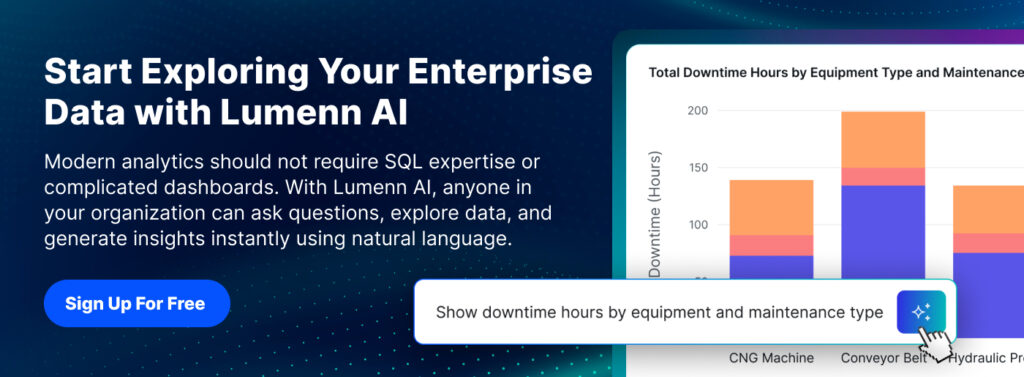
Instead of learning technical query languages or navigating complex BI tools, users can simply ask questions in plain English and instantly receive insights, visualizations, and explanations. This shift is transforming analytics from a specialized skill into an organization wide capability.
What Are Natural Language Queries?
Natural Language Queries allow users to interact with enterprise data using everyday language instead of code.
For example, users can ask questions like:
- “What were our top performing products last quarter?”
- “Show revenue trends by region.”
- “Which customer segment has the highest churn risk?”
- “Compare this month’s sales with last month.”
The AI engine interprets the intent, converts it into structured queries, retrieves relevant data, and generates visual insights automatically.
This creates a more intuitive and accessible analytics experience for both technical and non-technical users.
Why Traditional Data Exploration Is No Longer Enough
Traditional enterprise analytics workflows were built for a different era. Most organizations still rely on static dashboards, manual SQL queries, or long reporting cycles.
These methods create several challenges:
Technical Dependency
Business users often depend on analysts or data teams to generate reports and answer questions.
Slow Decision Making
By the time reports are prepared, the business situation may already have changed.
Limited Accessibility
Many employees avoid analytics tools because they feel too technical or complicated.
Fragmented Insights
Data spread across multiple systems makes exploration difficult and time consuming.
Modern businesses need faster, simpler, and more collaborative ways to explore information.
The Rise of Conversational Analytics
Natural Language Queries are part of a larger transformation known as conversational analytics.
This approach allows users to interact with data as naturally as they interact with search engines or AI assistants. Instead of clicking through multiple dashboards, users can ask follow up questions, refine insights, and explore trends dynamically.
Why Businesses Are Adopting Conversational Analytics
Organizations are rapidly moving toward conversational analytics because it:
- Reduces dependency on technical teams
- Accelerates data driven decision making
- Improves adoption across departments
- Makes analytics accessible to everyone
- Encourages deeper exploration of business trends
Analytics is no longer limited to analysts. It is becoming a daily business activity.
How Natural Language Queries Improve Enterprise Productivity
One of the biggest advantages of Natural Language Queries is speed.
Employees no longer need to wait for reports or learn SQL syntax. They can explore data independently and receive answers instantly.
Faster Access to Insights
Natural Language Queries dramatically reduce the time between question and answer. Teams can identify trends, monitor KPIs, and investigate issues in real time.
Better Collaboration Across Teams
When analytics becomes accessible, departments can collaborate more effectively using a shared understanding of data.
Increased Data Literacy
Users become more confident exploring data because the interaction feels natural rather than technical.
More Agile Decision Making
Organizations can respond faster to changing market conditions, customer behavior, and operational challenges.
Natural Language Queries and AI Driven Analytics
Artificial intelligence plays a critical role in making Natural Language Queries possible.
Modern AI powered analytics platforms can:
- Interpret business intent
- Understand context and terminology
- Generate SQL automatically
- Recommend visualizations
- Explain insights in plain language
This combination of AI and conversational interfaces is changing how enterprises interact with information.
Instead of static reporting systems, businesses now have intelligent analytics environments that actively support exploration and decision making.
Why Natural Language Queries Are the Future
The future of enterprise analytics is not just about bigger dashboards or more charts. It is about removing friction between people and data.
Natural Language Queries represent that future because they align with how humans naturally think and communicate.
Key Trends Driving Adoption
AI First Workflows
Organizations increasingly expect AI to simplify complex tasks.
Self Service Analytics
Business users want direct access to insights without technical barriers.
Real Time Decision Making
Companies need immediate visibility into operations and performance.
Explainable Analytics
Users want transparency in how insights are generated.
Enterprise Scale Accessibility
Analytics must work for every department, not just data specialists.
As these trends accelerate, conversational analytics will become the standard experience for enterprise data exploration.
How Lumenn AI Is Transforming Enterprise Data Exploration
Lumenn AI is built around a simple idea: enterprise analytics should be as easy as asking a question.
With AI powered Natural Language Queries, Lumenn AI enables business users to explore data instantly without writing SQL or navigating complex BI tools.
Users can ask questions in plain English and immediately receive:
- Interactive charts and visualizations
- Text based insights and summaries
- Dashboard ready analytics
- Real time results from live enterprise data
Lumenn AI connects securely to major data platforms including PostgreSQL, Snowflake, Amazon Redshift, Google BigQuery, Azure SQL, AWS S3, and more.

Beyond conversational analytics, Lumenn AI also provides:
AI Powered Data Quality
Automatically detect anomalies, duplicates, null values, and inconsistencies before they impact analytics.
Self Service Dashboards
Create dynamic dashboards from generated insights without technical expertise.
SQL Refinery
Refine AI generated SQL using natural language for greater transparency and control.
Chain of Thoughts
Understand how insights are generated through structured AI reasoning and explainability.
Data Dictionary Integration
Add business context to improve accuracy and reduce AI hallucinations.
Lumenn AI transforms enterprise analytics into a faster, more collaborative, and more trusted experience for every team.
Industries Benefiting from Natural Language Analytics
Natural Language Queries are transforming analytics across industries.
Retail
Analyze customer behavior, inventory trends, and sales performance instantly.
Healthcare
Explore patient data, operational metrics, and treatment outcomes more efficiently.
Finance
Monitor revenue, expenses, profitability, and anomalies in real time.
Manufacturing
Track production efficiency, downtime, and operational KPIs.
SaaS & Technology
Understand product adoption, churn risk, and user engagement trends.
Every industry benefits when data becomes easier to explore.
The Future of Enterprise Analytics Is Conversational
Natural Language Queries are redefining how businesses interact with data. They remove technical barriers, accelerate insights, and empower every employee to participate in data-driven decision making.
As AI continues to evolve, conversational analytics will become the foundation of modern enterprise intelligence.
The organizations that embrace this shift early will move faster, collaborate better, and make smarter decisions with confidence.