

Healthcare organizations operate in one of the most complex and data intensive environments in the world. From patient outcomes and clinical operations to staffing, finance, and compliance, every decision depends on timely and accurate data. Traditional reports and static dashboards can no longer keep up with the speed and scale of modern healthcare. This is where live dashboards become essential.
Live dashboards enable healthcare leaders, clinicians, and administrators to view real-time insights, respond faster to changes, and make confident data driven decisions that directly impact patient care and operational efficiency.
The Growing Data Challenge in Healthcare
Healthcare systems generate massive volumes of data every day. Electronic health records, lab systems, imaging platforms, billing systems, and operational tools all contribute to a fragmented data landscape. While data availability has increased, accessibility and usability remain major challenges.
Many healthcare organizations still rely on manual reports, delayed analytics, or siloed dashboards that do not reflect current conditions. This lag between data creation and insight leads to missed signals, inefficiencies, and increased risk.
Live dashboards address this challenge by bringing real-time visibility across clinical, operational, and financial data into a single trusted view.
What Are Live Dashboards in Healthcare
Live dashboards are interactive, real-time visual interfaces that automatically refresh as underlying data changes. Instead of static reports that require manual updates, live dashboards continuously query data sources and display up to date metrics.
In a healthcare context, live dashboards can track metrics such as patient admissions, bed occupancy, length of stay, readmission rates, staffing levels, equipment utilization, revenue performance, and compliance indicators all in real-time.
Why Live Dashboards Matter for Healthcare Decision Making
Faster Clinical Decisions
In clinical environments, timing is critical. Delays in recognizing trends or anomalies can directly affect patient outcomes. Live dashboards allow care teams and administrators to monitor key clinical indicators as they happen.
For example, a sudden spike in emergency department admissions or ICU occupancy can be identified immediately, enabling faster resource allocation and intervention.
Improved Operational Efficiency
Healthcare operations depend on coordination across departments. Live dashboards provide a shared source of truth for operational metrics such as patient flow, staffing availability, and equipment usage.
With real-time visibility, administrators can proactively address bottlenecks, reduce wait times, and optimize scheduling without relying on outdated reports.
Better Resource Management
Hospitals and healthcare systems face constant pressure to do more with limited resources. Live dashboards help leaders track resource utilization continuously.
This includes monitoring bed availability, staff coverage, operating room usage, and medical equipment performance. Real-time insights support smarter allocation and reduce waste.
Enhanced Financial Oversight
Healthcare finance teams need timely insight into revenue cycles, billing performance, and cost trends. Static financial reports often lag behind reality, making it difficult to respond to changes.
Live dashboards enable finance teams to track revenue, expenses, and reimbursement patterns as they occur, improving forecasting and financial control.
The Role of Live Dashboards in Patient Centric Care
Modern healthcare is increasingly patient centric. Live dashboards support this shift by enabling organizations to monitor care quality metrics in real-time.
Healthcare leaders can track indicators such as readmissions, treatment outcomes, patient satisfaction scores, and compliance metrics continuously. This visibility helps organizations identify risks early and take corrective action before issues escalate.
By aligning operational and clinical data, live dashboards ensure that decisions always prioritize patient outcomes.
Why Traditional Dashboards Fall Short
Traditional dashboards are often built on batch processing and manual refresh cycles. This approach introduces delays and limits responsiveness.
Key limitations of traditional dashboards include outdated data, heavy reliance on technical teams, limited flexibility, and lack of integration across systems.
Live dashboards overcome these limitations by offering continuous updates, self service access, and unified visibility across multiple data sources.
How Lumenn AI Enables Live Dashboards for Healthcare
Lumenn AI is designed to simplify enterprise analytics for healthcare organizations while maintaining security and compliance.
Real-time In Place Analytics
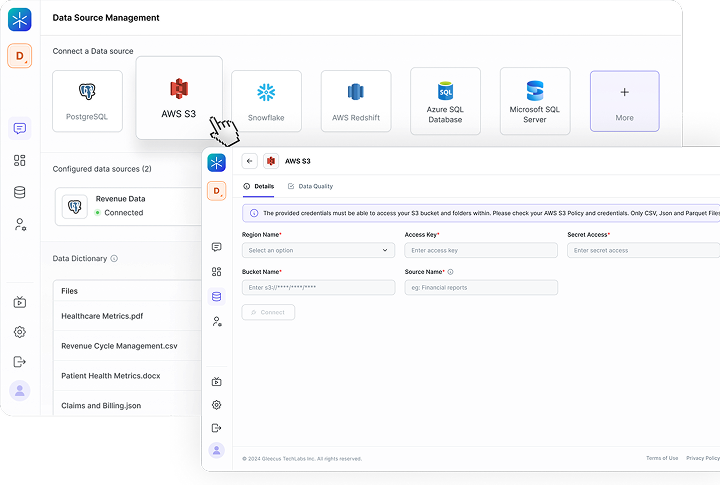
Lumenn AI connects directly to healthcare data sources such as clinical databases, operational systems, and cloud data warehouses. Data is queried in place without movement or duplication, ensuring real-time accuracy and compliance.
No Code Dashboard Creation
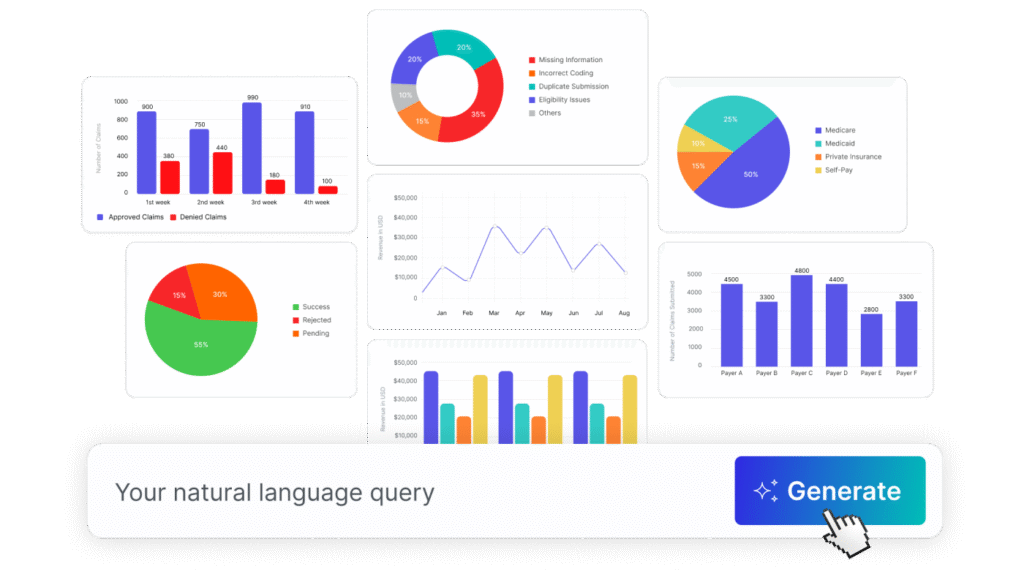
With Lumenn AI, healthcare teams can create dashboards without technical expertise. Visualizations generated from natural language queries can be instantly added to dashboards, making analytics accessible to clinicians and administrators alike.
Automatic and Manual Refresh Control
Lumenn AI dashboards can refresh automatically on a schedule or be refreshed manually on demand. This flexibility allows teams to balance performance needs with real-time visibility.

Secure and Governed Access
Healthcare data requires strict governance. Lumenn AI provides role based access control, encryption, and audit logs to ensure dashboards remain secure and compliant with regulatory requirements.

Unified View Across Departments
Lumenn AI allows healthcare organizations to combine insights from multiple threads and data sources into a single dashboard. This creates a holistic view across clinical, operational, and financial domains.
Key Use Cases for Live Dashboards in Healthcare
| Hospital Operations Monitoring | Track admissions, discharges, bed occupancy, and staffing levels in real-time to improve patient flow and reduce bottlenecks. |
| Clinical Performance Tracking | Monitor treatment outcomes, readmission rates, and quality metrics to support continuous improvement initiatives. |
| Financial and Revenue Cycle Management | Gain real-time visibility into billing performance, reimbursements, and cost drivers. |
| Executive Decision Support | Provide leadership teams with a live, unified view of organizational performance to support strategic decisions. |
The Future of Healthcare Analytics Is Live
Healthcare organizations can no longer afford delayed insights. As data volumes grow and complexity increases, live dashboards become a foundational capability for modern healthcare decision making.
By enabling real-time visibility, faster responses, and data driven collaboration, live dashboards help healthcare organizations improve outcomes, optimize operations, and build resilient systems.
Lumenn AI empowers healthcare teams to move beyond static reports and embrace live, intelligent dashboards that reflect the true state of their organization.