
As organizations become increasingly data-driven, the way teams interact with data is evolving. While SQL has long been the standard for querying and analyzing structured data, natural language analytics is rapidly redefining how insights are accessed and shared across businesses.
So what works better today—writing SQL manually or using natural language analytics? The answer lies in how modern teams balance speed, accessibility, and trust.
The Traditional Approach: Writing SQL
SQL has powered analytics for decades. It offers precision, flexibility, and control over data logic, making it indispensable for technical users.
Why SQL Became the Standard
- Precise control over joins, filters, and aggregations
- Suitable for complex transformations
- Deeply embedded in data engineering workflows
However, SQL was designed for specialists—not for everyday business users.
Limitations of SQL-Driven Analytics
- Requires technical expertise
- Creates bottlenecks when business teams depend on analysts
- Slows down decision-making
- Makes experimentation expensive and time-consuming
As data demand grows across teams, SQL alone struggles to scale.
The Shift to Natural Language Analytics
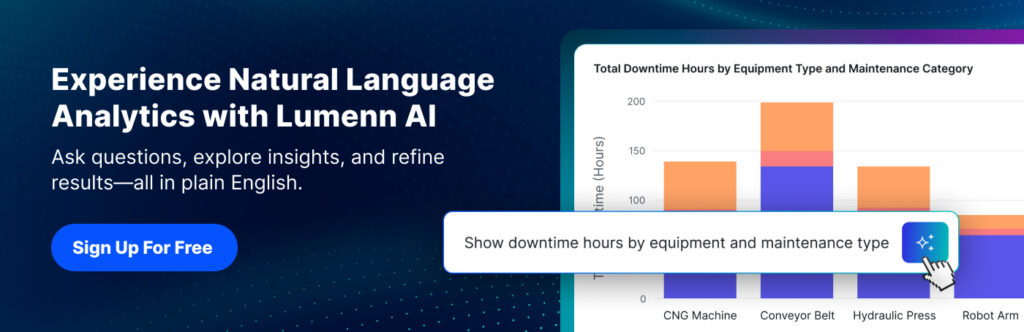
Natural language analytics allows users to ask questions in plain English and instantly receive insights. Instead of writing code, users interact with data conversationally:
- “Show revenue growth by region”
- “What were our top-selling products last quarter?”
This shift is transforming analytics from a technical task into a business capability.
Why Natural Language Analytics Works Better for Modern Teams
1. Analytics for Everyone
Natural language analytics removes the technical barrier. Business users, managers, and executives can explore data without learning SQL.
2. Faster Time to Insight
Insights are generated instantly—no waiting for queries to be written or revised.
3. Scales Across the Organization
Analytics is no longer limited to data teams. Every department can ask and answer questions independently.
4. Encourages Exploration
Users can ask follow-up questions naturally, leading to deeper insights and better decisions.
Natural Language Analytics vs Writing SQL: A Comparison
| Criteria | Writing SQL | Natural Language Analytics |
|---|---|---|
| Accessibility | Limited to technical users | Open to all users |
| Speed | Slower iteration | Instant responses |
| Scalability | Bottlenecked | Organization-wide |
| Learning Curve | High | Minimal |
| Exploration | Structured | Conversational |
Natural language analytics clearly wins when it comes to speed, accessibility, and scale—the qualities modern teams need most.
How Lumenn AI Elevates Natural Language Analytics
Lumenn AI is built as a natural language analytics platform from the ground up, designed to make enterprise data easy to explore, understand, and trust.
Ask Questions in Plain English
Users interact with data using natural language—no coding, no BI training, no complexity.
Transparent, Explainable Insights
Lumenn AI doesn’t just generate results; it shows the logic behind them, enabling users to understand how insights are derived.
Refine Insights Without Starting Over
With features like SQL Refinery, users can adjust AI-generated insights using natural language—refining filters, time ranges, or conditions and regenerating results instantly.
Enterprise-Ready by Design
Lumenn AI connects securely to enterprise data sources and queries data in place, ensuring governance, security, and compliance.
When Writing SQL Still Has a Role
SQL remains valuable for:
- Advanced transformations
- Data engineering pipelines
- Specialized analytical workflows
But it should not be the default interface for everyday analytics.
When Natural Language Analytics Works Best
Natural language analytics excels when:
- Speed matters
- Teams need self-service insights
- Data access must scale beyond analysts
- Decision-making depends on rapid iteration
For most business scenarios, natural language analytics delivers better outcomes with less friction.
The Verdict: What Works Better?
Natural language analytics is not about replacing SQL—it’s about removing unnecessary complexity.
SQL remains powerful in the background. Natural language becomes the interface.
Platforms like Lumenn AI bring these together, enabling users to start with natural language, refine insights confidently, and trust the results—without writing SQL.
Final Thoughts
Analytics should adapt to how people think and work. Natural language analytics transforms data into a shared language across the organization, accelerating insights and improving decisions.
The future of analytics belongs to platforms that make data accessible, explainable, and interactive—by design.