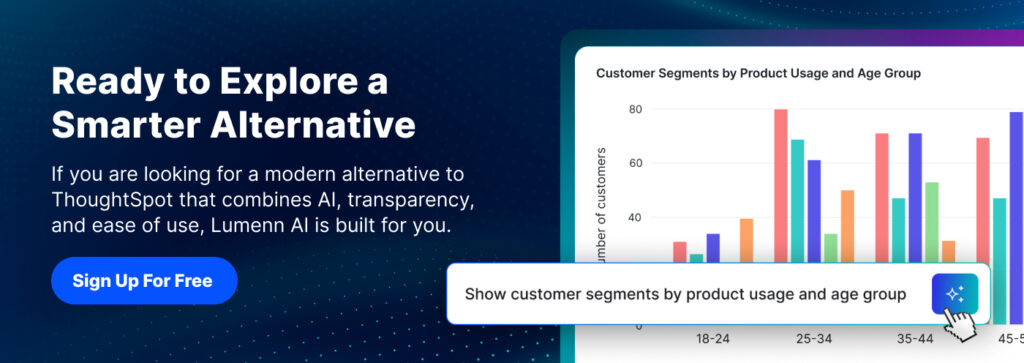

Businesses today are moving beyond traditional business intelligence tools. While platforms like ThoughtSpot have popularized search-driven analytics, modern teams are now looking for more flexibility, transparency, and ease of use in their analytics workflows.
From natural language querying to no code dashboards and explainable AI, the expectations from analytics platforms have evolved significantly in 2026. Organizations want tools that are not just powerful, but also intuitive, transparent, and built for real-time decision making.
If you are exploring alternatives to ThoughtSpot, this guide highlights some of the top platforms that offer modern capabilities for enterprise analytics.
Why Look for a ThoughtSpot Alternative
ThoughtSpot is known for its search-based analytics approach, allowing users to query data using natural language. However, many businesses today are seeking additional capabilities such as:
- Greater transparency in how insights are generated
- More flexibility in refining queries without technical expertise
- Stronger data governance and explainability
- Simpler user experience for non-technical teams
- Better integration across multiple data sources
This is where modern alternatives are stepping in with more advanced, AI driven, and user-friendly solutions.
1. Lumenn AI
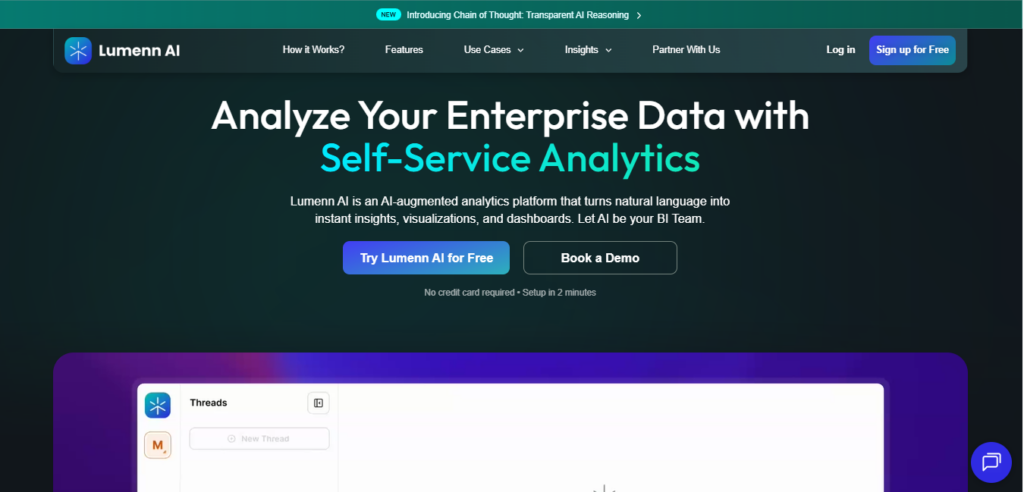
Lumenn AI stands out as a next generation enterprise analytics platform designed to make data truly accessible to every team. It combines natural language querying with explainable AI, giving users both speed and transparency in their analytics experience.
Unlike traditional BI tools, Lumenn AI focuses on eliminating technical barriers while still providing control and clarity over insights. Users can ask questions in plain English, generate visualizations instantly, and even understand how insights are derived through structured reasoning.
One of its key strengths is the ability to refine insights using natural language. Instead of rewriting queries or relying on technical teams, users can adjust filters, time ranges, or logic simply by describing changes. This creates a more interactive and intuitive analytics workflow.
Lumenn AI also supports seamless multi source integration, allowing businesses to connect databases and cloud storage without moving data. Combined with self-service dashboards and built in data quality checks, it offers a complete analytics experience.
For organizations looking for a balance between simplicity, transparency, and enterprise grade capabilities, Lumenn AI is a strong alternative to ThoughtSpot.
2. Tableau
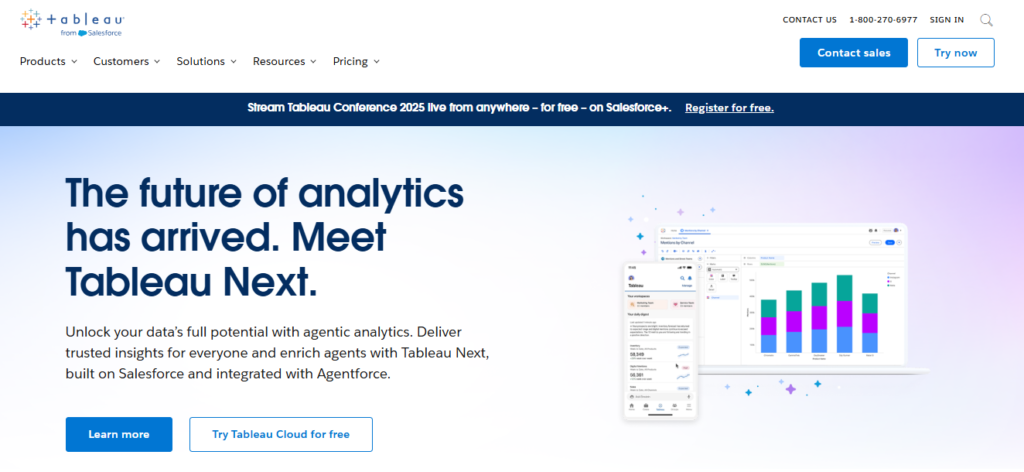
Tableau is one of the most widely used data visualization platforms in the market. It is known for its powerful visual analytics and ability to handle large datasets.
It offers drag and drop functionality, making it easier for users to build dashboards and explore data visually. Tableau also supports a wide range of integrations and is backed by a strong community.
However, it often requires a learning curve, especially for non-technical users. While it has introduced AI features, it may not provide the same level of conversational simplicity as newer platforms.
3. Domo
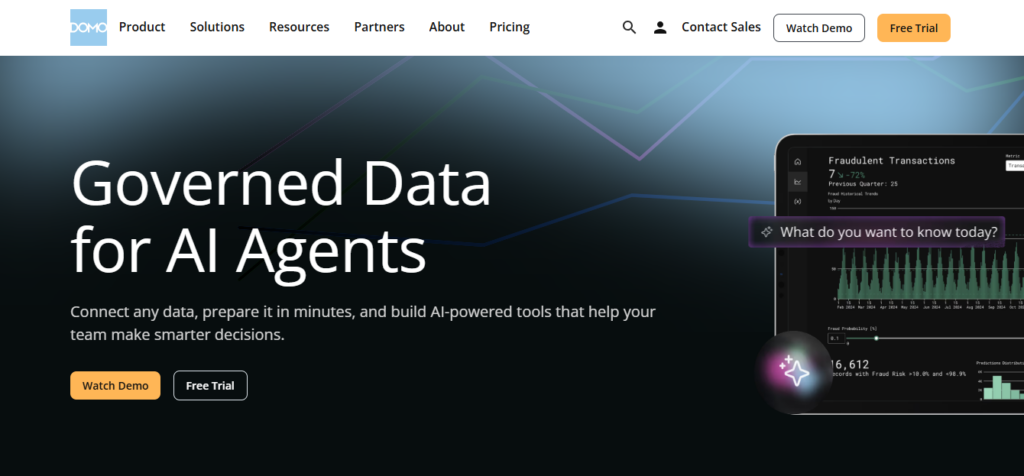
Domo is a cloud-based analytics platform that focuses on data integration and business dashboards. It provides end-to-end capabilities, including data pipelines, visualization, and collaboration tools.
It is well suited for organizations looking to centralize data and monitor performance metrics across teams. Domo also offers mobile-friendly dashboards and real-time data updates.
That said, users may find it complex when it comes to customization and advanced analytics workflows, especially without technical support.
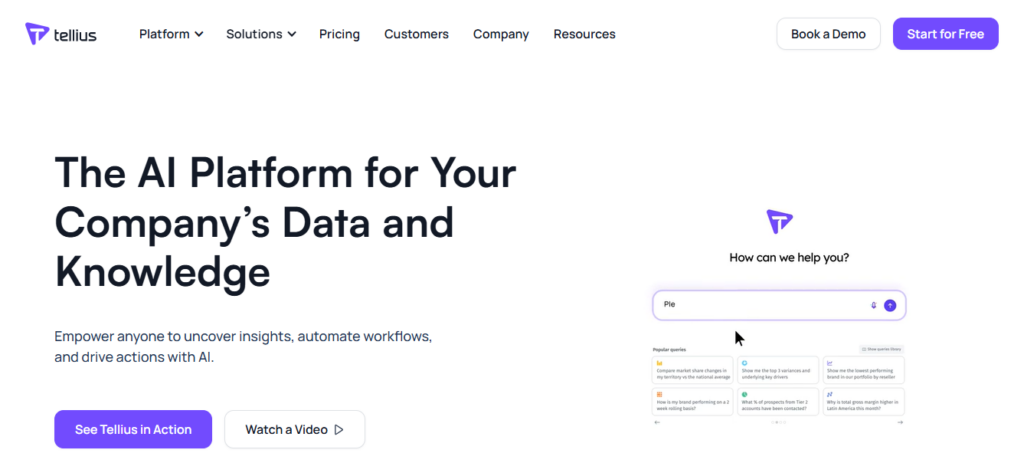
4. Tellius
Tellius is an AI-driven analytics platform that emphasizes augmented analytics and automated insights. It uses machine learning to identify patterns, trends, and anomalies in data.
The platform supports natural language querying and automated exploration, making it useful for discovering hidden insights.
While Tellius is strong in AI driven discovery, some users may find it less intuitive when it comes to building and managing dashboards compared to more user focused platforms.
5. Bold BI
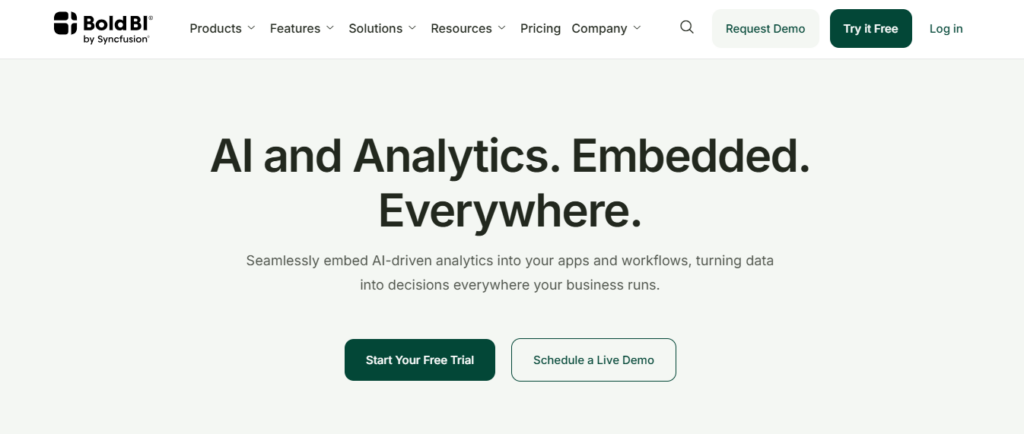
Bold BI is a flexible business intelligence tool designed for embedded analytics and reporting. It allows organizations to integrate dashboards directly into their applications.
It supports a wide range of data sources and offers customizable dashboards for different use cases. Bold BI is often preferred by teams looking for white label or embedded analytics solutions.
However, its interface and setup process may require technical expertise, which can limit accessibility for non-technical users.
Choosing the Right Analytics Platform
Selecting the right alternative depends on your organization’s needs. If your priority is advanced visualization, tools like Tableau may be suitable. If you need embedded analytics, Bold BI could be a fit.
However, if your goal is to empower every team member with simple, transparent, and AI-driven analytics, platforms like Lumenn AI stand out.
The future of analytics is not just about accessing data. It is about understanding it, trusting it, and acting on it quickly.
The Future of Analytics Is Transparent and Conversational
In 2026, businesses expect more from their analytics platforms. They want tools that combine the power of AI with human-friendly experiences. They want insights that are not only fast, but also explainable and actionable.
Modern analytics platforms are moving toward:
- Natural language interaction
- Real time insights from live data
- Transparent and explainable AI
- Self-service dashboards for all teams
- Seamless integration across data sources
Organizations that adopt these capabilities will be better positioned to make faster and more confident decisions.