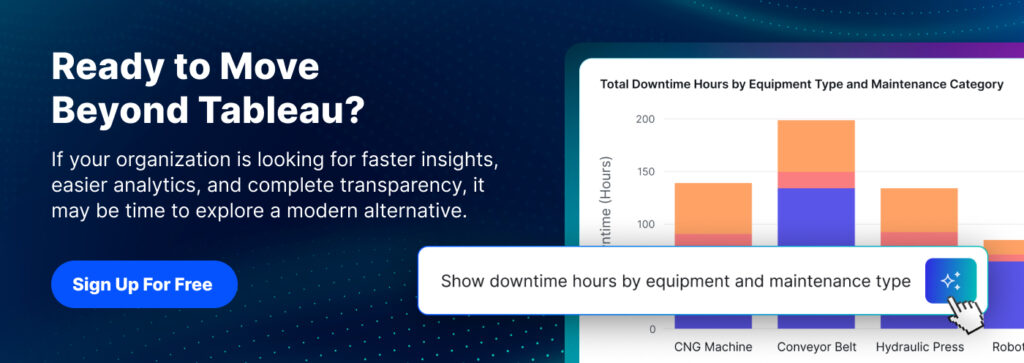

Modern businesses are rapidly evolving beyond traditional dashboards. While Tableau remains a powerful data visualization tool, many organizations are now looking for alternatives that offer AI-driven insights, real-time analytics, lower costs, and easier usability.
In 2026, the expectations from analytics platforms have shifted. Teams want more than charts. They want answers, automation, and explainability.
In this guide, we explore the top Tableau alternatives, starting with Lumenn AI, followed by Power BI, Sisense, ThoughtSpot, Qlik, and Tellius.
Why Businesses Are Looking for Tableau Alternatives
Tableau is widely known for its strong visualization capabilities, but modern teams are facing new challenges:
- Increasing need for AI-powered analytics and automation
- Dependence on technical users for dashboards
- High cost at scale
- Limited explainability in AI-driven workflows
Many newer platforms are solving these gaps by focusing on natural language querying, automation, and real-time decision intelligence.
Lumenn AI
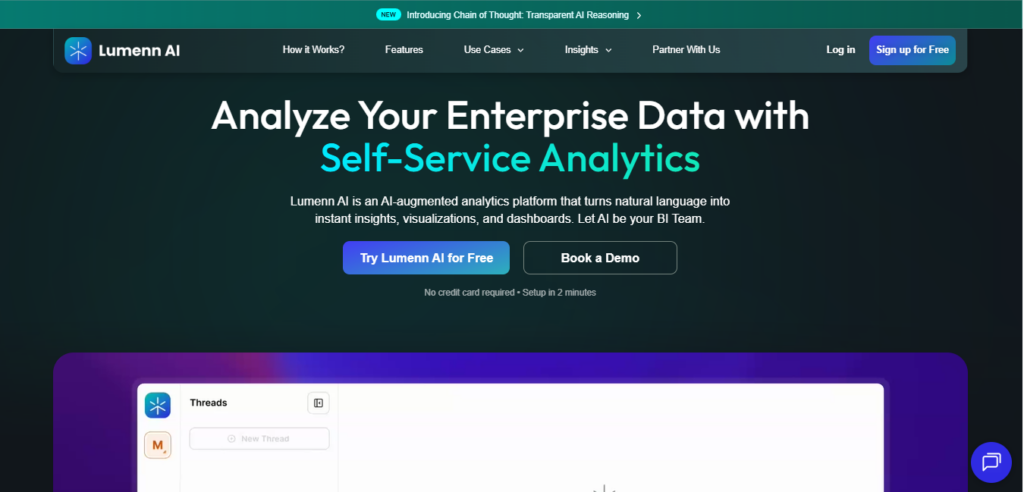
Lumenn AI represents a new generation of analytics platforms built for how businesses actually work today.
Instead of requiring users to build dashboards manually or write queries, Lumenn AI allows teams to simply ask questions in natural language and instantly receive insights, visualizations, and recommendations.
What Makes Lumenn AI Different
Lumenn AI combines multiple capabilities into one unified experience:
- Natural language queries for instant insights
- No-code dashboards built directly from conversations
- In-place data querying with secure integrations
- AI-powered data quality checks
- Chain of Thoughts for transparent reasoning
- SQL Refinery for refining insights using natural language
This eliminates the traditional gap between business users and data teams.
Pros
- Extremely easy for non-technical users
- Built-in AI reasoning and transparency
- No data movement required
- Faster insight generation compared to traditional BI tools
Cons
- Less focused on highly custom visual design compared to legacy BI tools
- Newer platform compared to long-established vendors
Lumenn AI is ideal for organizations that want to move from dashboarding to decision intelligence.
Microsoft Power BI
Microsoft Power BI is one of the most widely adopted analytics platforms globally, especially among enterprises using Microsoft tools. It enables users to build dashboards, connect to hundreds of data sources, and create reports with drag-and-drop ease, making it a default choice for many organizations.
Pros
- Affordable pricing model
- Strong integration with Excel, Azure, and Teams
- Wide range of connectors and visualizations
Cons
- Requires learning DAX for advanced use
- Limited automated insights and reasoning
- Still dashboard-centric rather than AI-first
Sisense
Sisense is designed for organizations that want to embed analytics into their own applications or products. It offers a flexible, API-driven architecture that allows developers to customize dashboards and integrate analytics deeply into user-facing platforms.
Pros
- Strong embedding and white-label capabilities
- Flexible APIs and developer tools
- Works across cloud environments
Cons
- More suited for technical teams
- Higher implementation effort
- Limited focus on self-service analytics
ThoughtSpot
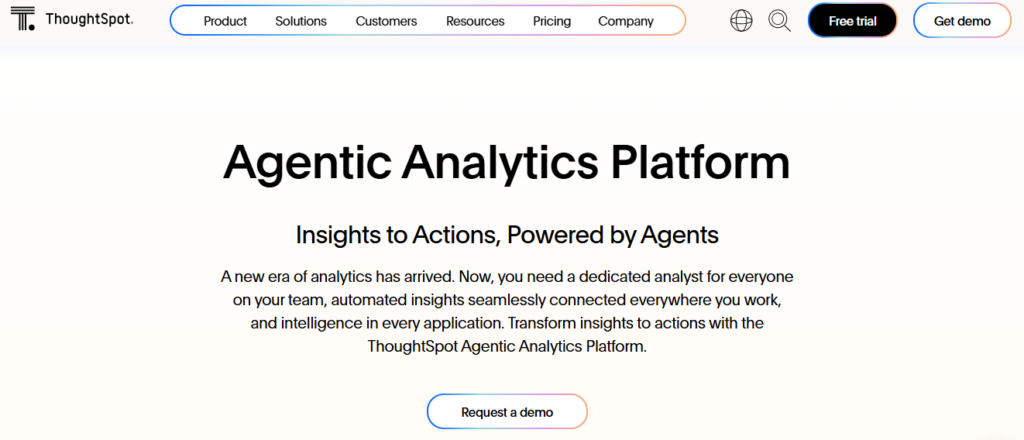
ThoughtSpot focuses on search-driven analytics, allowing users to explore data using natural language queries instead of building dashboards manually. It emphasizes fast, self-service insights and helps business users access data without relying heavily on technical teams.
Pros
- Intuitive natural language search
- Fast query-to-insight experience
- Strong self-service capabilities
Cons
- Requires well-modeled data environments
- Limited deep reasoning or transparency
- Can become expensive at scale
Qlik
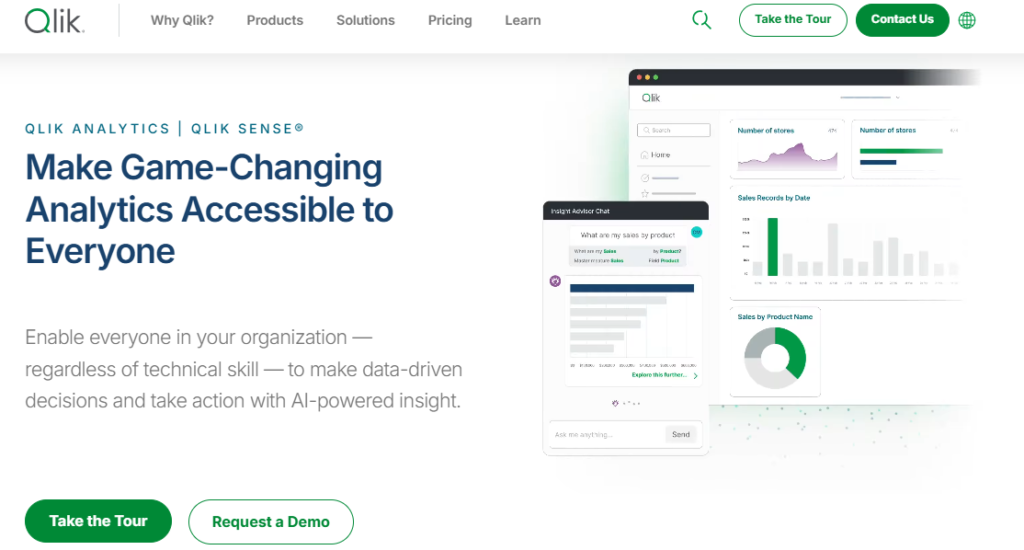
Qlik Sense is known for its associative data model, which allows users to explore relationships between datasets dynamically. It enables flexible filtering and discovery, helping users uncover hidden patterns across complex datasets for deeper analysis.
Pros
- Powerful data exploration capabilities
- Flexible and intuitive filtering
- Strong performance with large datasets
Cons
- Learning curve for new users
- Less intuitive for business teams
- Limited AI-driven automation
Tellius
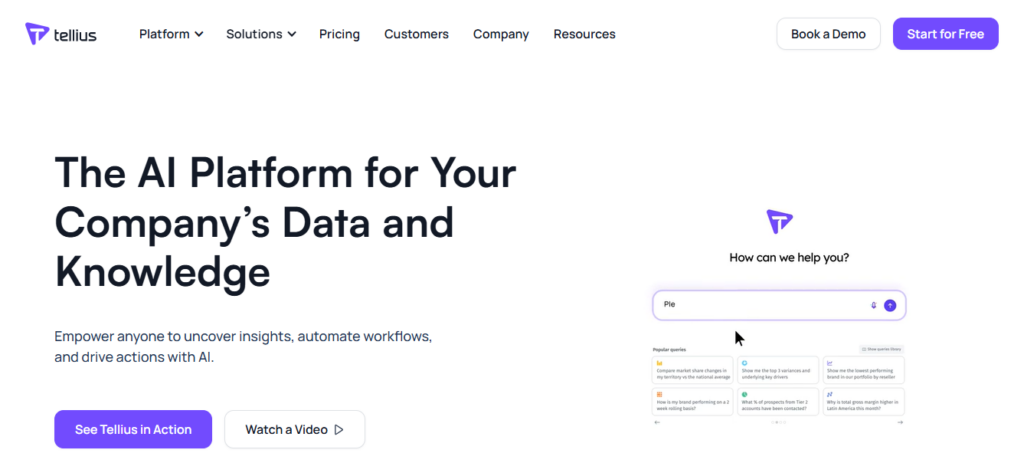
Tellius is an AI-driven analytics platform focused on automated insights and root cause analysis. It goes beyond dashboards by identifying patterns, explaining changes in metrics, and delivering actionable insights without requiring users to manually explore data.
Pros
- Strong automated analysis and root cause detection
- AI-driven insights and narratives
- Designed for advanced analytics workflows
Cons
- Can feel complex for non-technical users
- Requires setup and data preparation
- Less intuitive for quick business queries
The Future of Analytics Is Beyond Dashboards
Tableau helped define modern data visualization. But today, organizations need more than visuals. They need platforms that:
- Answer questions instantly
- Explain how insights are generated
- Allow users to refine and explore data without technical barriers
This is where AI-first platforms like Lumenn AI are redefining the analytics landscape.