
In today’s data-driven world, information is no longer the problem. Access is.
Organizations generate massive volumes of data every day, yet most business users still struggle to turn that data into meaningful insights. For years, analytics remained limited to technical teams who could write queries, build models, and interpret complex dashboards.
That is changing rapidly.
Artificial intelligence is redefining how businesses interact with data, making it accessible, understandable, and actionable for everyone, not just analysts. From executives to operations teams, AI is enabling a new era of truly democratized analytics.
The Traditional Barriers to Data Access
Before AI, accessing data required specialized skills and tools. Business users often depended on data teams for even the simplest questions.
This created several challenges:
- Limited access to insights due to technical barriers
- Long turnaround times for reports and dashboards
- Fragmented communication between business and data teams
- Delayed decision making in fast moving environments
Even with modern BI tools, complexity remained a hurdle. Filters, dashboards, and SQL queries often required training, leaving non-technical users dependent on experts.
The Shift Toward AI Powered Analytics
AI is transforming analytics by removing these barriers. Instead of learning tools, users can now interact with data naturally.
Natural Language Queries
One of the biggest breakthroughs is the ability to ask questions in plain English. Users no longer need to write SQL or understand database structures.
For example:
“What were our top performing products last quarter?”
“Which region is showing declining revenue trends?”
AI interprets the question, generates the query, and delivers insights instantly. This makes analytics accessible to every role in the organization.
From Data Exploration to Instant Insights
AI does more than simplify access. It accelerates the entire analytics process.
Faster Time to Insight
Instead of waiting hours or days for reports, users get answers in seconds. This allows teams to respond quickly to market changes, operational issues, or customer trends.
Visual and Contextual Outputs
AI doesn’t just return numbers. It provides charts, summaries, and explanations that make insights easier to understand and act on.
This combination of speed and clarity is redefining how decisions are made across organizations.
Breaking Down Data Silos
Modern businesses rely on multiple systems such as CRM, finance tools, product analytics platforms, and cloud storage.
AI powered analytics platforms can connect to these sources and unify data access without requiring migration. This allows users to explore relationships across datasets and gain a complete view of business performance.
When data becomes connected, insights become more powerful.
Building Trust Through Explainable AI
As AI becomes central to analytics, trust becomes critical. Business users need to understand how insights are generated.
Transparency in Analytics
Modern AI platforms now provide visibility into how queries are interpreted, how logic is applied, and how results are derived. This ensures that users can validate insights before acting on them.
Reducing Errors and Misinterpretation
AI systems that incorporate business context and data quality checks produce more accurate results. This builds confidence across teams and encourages broader adoption of analytics.
Empowering Non-Technical Teams
AI is not just a tool for analysts anymore. It is empowering teams across the organization.
Business Leaders
Executives can access real-time insights without waiting for reports, enabling faster strategic decisions.
Product and Marketing Teams
Teams can analyze user behavior, campaign performance, and growth metrics independently, improving agility and experimentation.
Operations and Finance
Operational teams can monitor performance, detect anomalies, and optimize processes with minimal technical support.
This shift reduces dependency on data teams while allowing them to focus on higher value work.
The Rise of Self-Service Analytics
Self-service analytics has been a goal for years, but AI is finally making it a reality.
Users can now:
- Ask questions directly and get instant answers
- Create dashboards without coding
- Explore data across multiple sources
- Share insights with teams easily
The result is a more collaborative, data driven culture where decisions are informed by real-time insights.
Lumenn AI: Making Enterprise Data Truly Accessible
Lumenn AI is built to bring this vision of accessible analytics to life. It combines the power of artificial intelligence with a simple, intuitive experience designed for every business user.
Natural Language Analytics
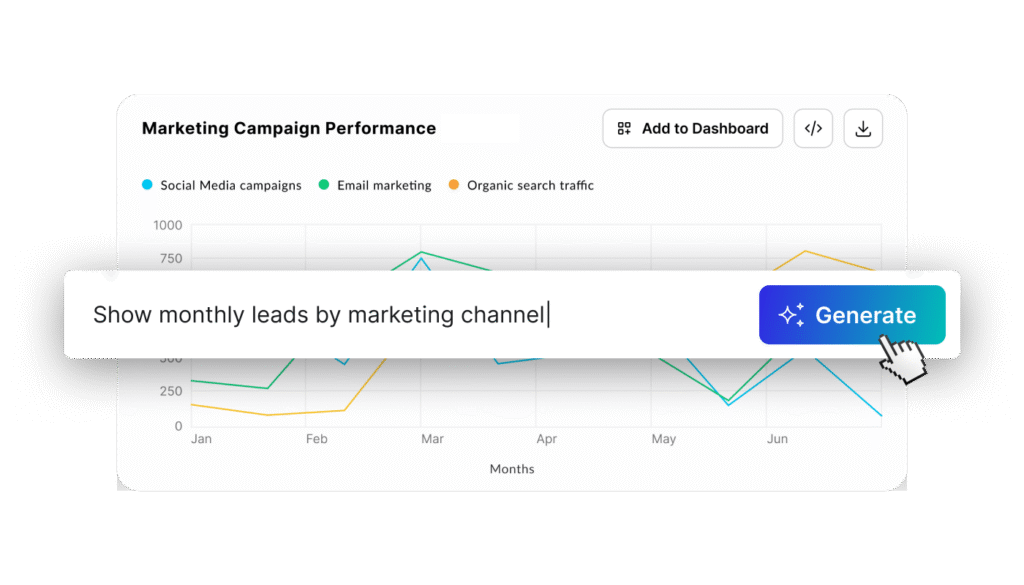
With Lumenn AI, users can ask questions in plain English and instantly receive visualizations, summaries, and insights. There is no need for SQL or technical expertise.
Unified Data Access
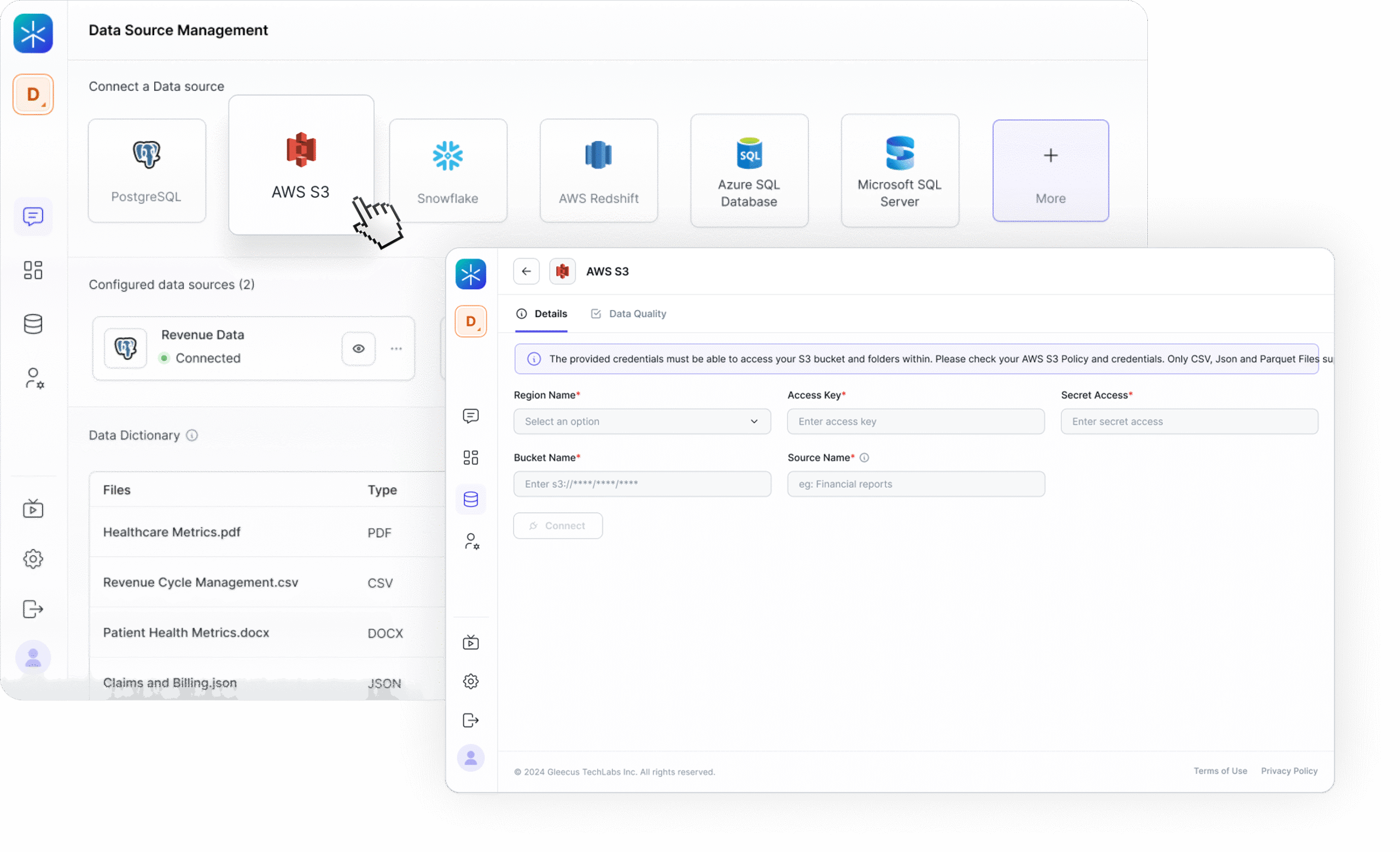
Lumenn AI connects to enterprise databases and cloud storage systems securely, enabling users to explore data across multiple sources without moving it.
Context Aware Intelligence
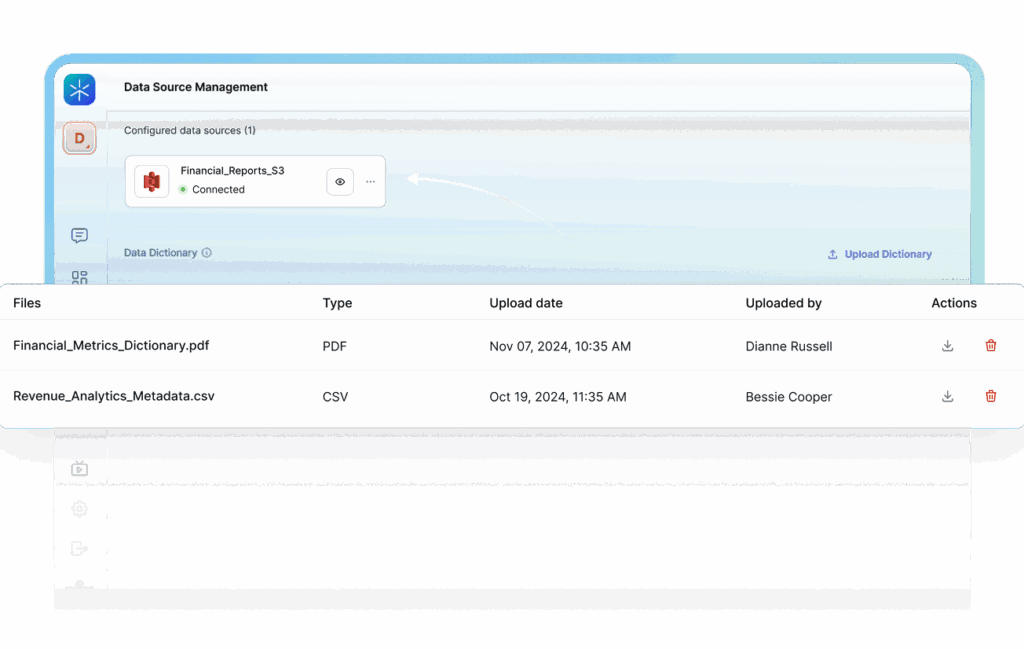
Through features like Data Dictionary, Lumenn AI understands business terminology and ensures insights align with organizational context.
Transparent and Explainable Insights
With capabilities like Chain of Thoughts and SQL Refinery, users can see how insights are generated and refine them as needed. This builds trust and confidence in AI-driven analytics.
Self Service Dashboards
Users can create, manage, and share dashboards effortlessly, ensuring teams stay aligned with real-time data.
Lumenn AI transforms complex enterprise data into clear, actionable intelligence that every team can use.

The Future of Data Accessibility
AI is not just improving analytics. It is redefining who can use data and how it is used.
In the future, every employee will be able to interact with data as easily as having a conversation. Insights will be generated in real time, guided by context, and supported by transparent logic.
Organizations that embrace this shift will move faster, make better decisions, and stay ahead in competitive markets.
Conclusion
AI is breaking down the barriers that once limited access to data. By simplifying interaction, accelerating insights, and improving trust, it is making analytics accessible to every business user.
This transformation is not just about technology. It is about empowering people to make smarter decisions with confidence.