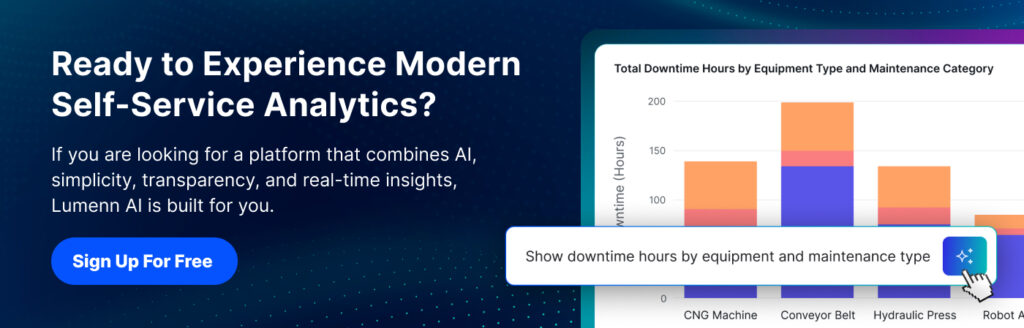

In 2026, self-service analytics is no longer a luxury. It is a necessity. Organizations want faster insights, less dependency on data teams, and tools that empower every employee to explore data independently.
According to industry insights, while access to BI tools is growing, only a small percentage of non-technical users fully utilize them, highlighting the need for more intuitive and AI-driven platforms .
This is where modern self-service analytics tools step in. They combine ease of use, AI capabilities, and real-time data access to help businesses move faster.
In this blog, we explore the top 5 self-service analytics tools to consider in 2026.
Lumenn AI
AI-First Self-Service Analytics for Modern Enterprises
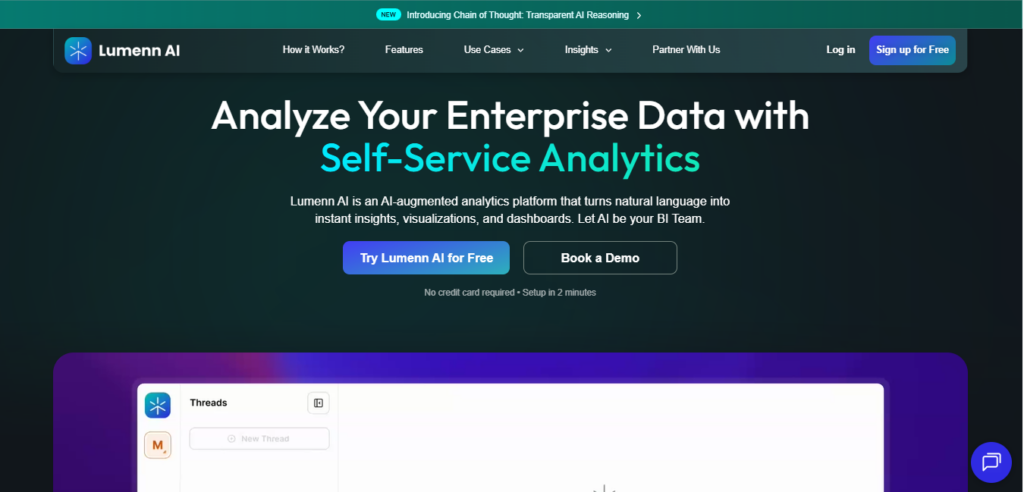
Lumenn AI is redefining self-service analytics with a fully AI-powered, no-code platform designed for business users. Unlike traditional BI tools, Lumenn AI focuses on simplifying analytics through natural language, automation, and explainability.
Key Features
- Natural language queries for instant insights
- No-code dashboard creation
- Multi-source data integration with in-place querying
- AI-driven data quality checks
- Chain of Thoughts for transparent reasoning
- SQL Refinery for refining insights using plain English
Why Choose Lumenn AI
Lumenn AI eliminates the complexity of traditional BI tools. It enables teams to ask questions, generate insights, and refine analysis without relying on SQL or technical expertise.
It is ideal for organizations looking to democratize data access and move toward AI-driven decision-making.
Microsoft Power BI
Best for Microsoft Ecosystem Integration
Microsoft Power BI continues to be a strong player in 2026, especially for organizations already using Microsoft tools like Excel, Azure, and Office 365.
Key Features
- Deep integration with Microsoft ecosystem
- Powerful data modeling with DAX
- Interactive dashboards and reports
- AI features like Copilot (premium tier)
Pros
- Familiar interface for Excel users
- Strong enterprise capabilities
- Scalable across organizations
Limitations
- Requires technical knowledge for advanced use
- Licensing can become complex
- AI features often require additional cost
Power BI is a solid choice for teams with existing Microsoft infrastructure and moderate technical expertise.
Tableau
Best for Advanced Data Visualization
Tableau is known for its industry-leading visualization capabilities. It is widely used by data analysts and organizations with dedicated BI teams.
Key Features
- Advanced visualization and dashboarding
- Drag-and-drop interface
- Strong data exploration capabilities
- Integration with Salesforce ecosystem
Pros
- Highly customizable visual analytics
- Large community and ecosystem
- Powerful for complex data exploration
Limitations
- Steep learning curve
- High cost at scale
- Requires technical expertise for full utilization
Tableau is best suited for organizations that prioritize deep analytics and have dedicated data professionals.
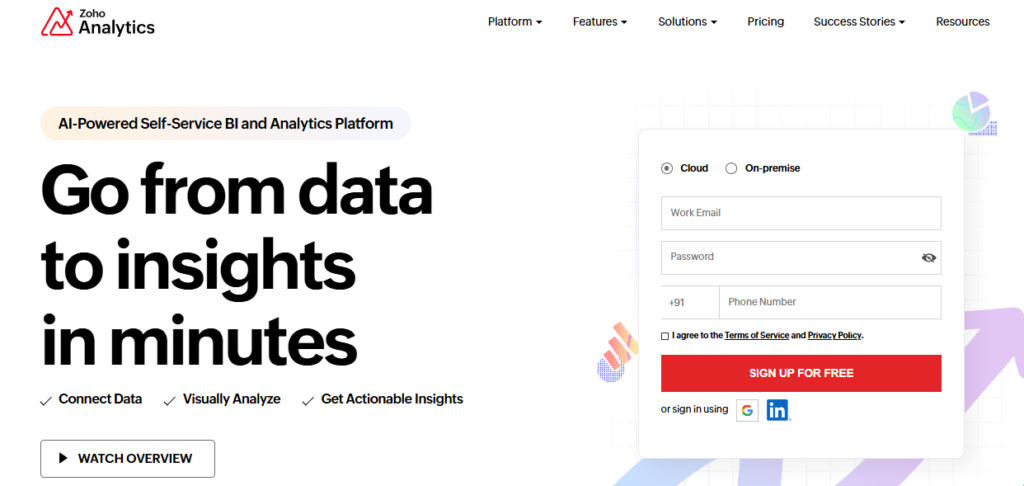
Zoho Analytics
Best for Cost-Effective Self-Service BI
Zoho Analytics offers a balanced combination of affordability and functionality, making it a popular choice for small and mid-sized businesses.
Key Features
- Drag-and-drop report builder
- AI assistant for natural language queries
- 500+ data connectors
- Automated insights and forecasting
Pros
- Easy to use for non-technical users
- Competitive pricing
- Built-in AI features across plans
Limitations
- May lack advanced customization for complex use cases
- Best suited for SMBs rather than large enterprises
Zoho Analytics stands out as a cost-effective solution that delivers strong self-service capabilities without heavy investment.
Qlik Sense
Best for Associative Data Discovery
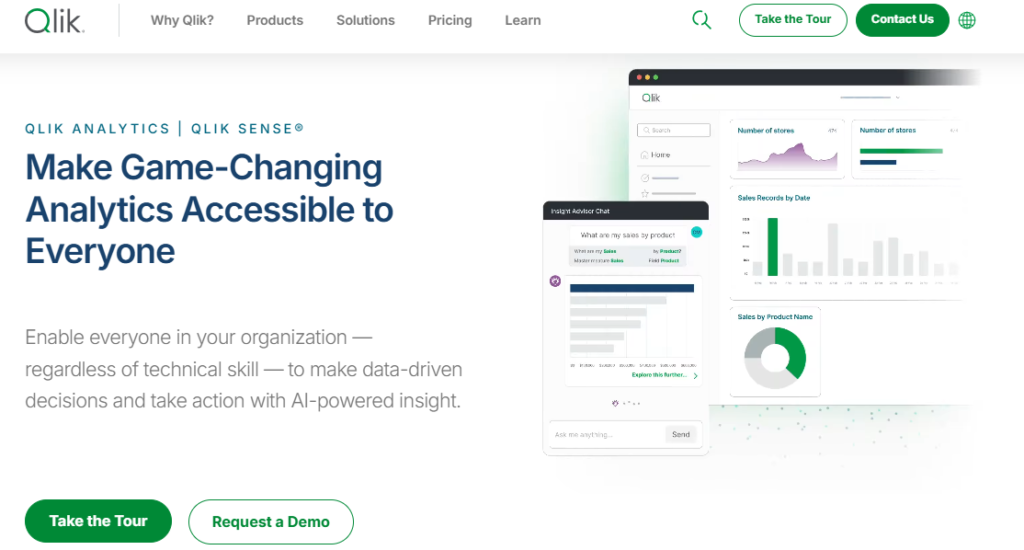
Qlik Sense differentiates itself with its associative analytics engine, allowing users to explore relationships across datasets without predefined queries.
Key Features
- Associative data model for deeper insights
- AI-driven analytics and suggestions
- Fast in-memory processing
- Mobile-friendly dashboards
Pros
- Powerful data exploration capabilities
- Handles complex datasets efficiently
- Flexible analytics approach
Limitations
- Requires technical setup for data integration
- Interface can feel less intuitive
- Licensing costs can increase with scale
Qlik Sense is ideal for organizations that need advanced data exploration and relationship analysis.
How to Choose the Right Self-Service Analytics Tool
Choosing the right self-service analytics platform in 2026 goes beyond comparing dashboards. Businesses need tools that are intelligent, easy to use, and built for real-time decision-making. Here are the key factors to evaluate and how Lumenn AI addresses each of them.
Ease of Use
A modern analytics platform should be accessible to every team member, not just analysts. Lumenn AI enables users to ask questions in plain English and instantly receive insights, removing the need for technical expertise or training.
AI Capabilities
AI is no longer optional. Lumenn AI integrates AI at every layer, from natural language querying to proactive insights through Auto Analyst and transparent reasoning with Chain of Thoughts, making analytics faster and smarter.
Data Integration
Seamless connectivity is critical. Lumenn AI connects to multiple enterprise data sources such as Snowflake, PostgreSQL, BigQuery, and more, while performing in-place querying to ensure secure, real-time analytics without data movement.
Data Accuracy and Trust
Reliable insights depend on reliable data. Lumenn AI includes built-in AI-driven data quality checks and a Data Dictionary to provide context, ensuring accurate, consistent, and trustworthy analytics outputs.
Scalability and Collaboration
As organizations grow, analytics should scale effortlessly. Lumenn AI supports multi-workspace collaboration, shared dashboards, and real-time updates, enabling teams across departments to work from a single source of truth.
Cost and Efficiency
Reducing dependency on data teams and eliminating complex BI workflows helps organizations save time and cost. Lumenn AI’s no-code approach empowers business users directly, accelerating decision-making without additional overhead.
Why Modern Businesses Are Choosing Lumenn AI
While many tools offer self-service analytics, Lumenn AI stands out by combining simplicity with intelligence. It is designed for organizations that want more than dashboards. It delivers a complete analytics experience where users can explore data, understand insights, and refine results in one unified platform.
With features like natural language queries, SQL Refinery, Chain of Thoughts, and AI-powered dashboards, Lumenn AI transforms analytics from a technical process into an intuitive business capability.
Instead of relying on multiple tools and teams, businesses can centralize their analytics workflow and move faster with confidence.