

Healthcare organizations generate massive amounts of data every day. Patient records, lab reports, imaging results, billing systems, operational metrics, insurance claims, and clinical trial data all contribute to an ever growing data ecosystem. While this information holds enormous value, turning it into timely and actionable insights has long been a challenge.
This is where artificial intelligence is transforming healthcare data analytics.
AI is helping hospitals, clinics, research institutions, and healthcare networks move beyond static reporting and delayed analysis. By automating complex processes, identifying patterns, and making data easier to explore, AI is enabling faster decisions, better patient outcomes, and more efficient operations.
In this article, we explore how AI is improving healthcare data analytics, why it matters in 2026, and how platforms like Lumenn AI are helping organizations unlock smarter healthcare intelligence.
Why Healthcare Data Analytics Matters More Than Ever
Healthcare decisions depend on data. Whether it is diagnosing patients, optimizing staffing levels, reducing readmissions, or improving treatment outcomes, accurate analytics can make a measurable difference.
However, many healthcare organizations still struggle with:
- Disconnected systems across departments
- Manual reporting processes
- Limited real time visibility
- Data quality issues
- Slow access to insights
- Technical barriers for non-technical users
As patient expectations rise and healthcare systems face increasing pressure to do more with less, modern analytics is no longer optional. It is essential.
How AI Is Changing Healthcare Data Analytics
Artificial intelligence helps healthcare teams process and understand large volumes of data faster than traditional methods. It can uncover trends, automate repetitive analysis, and support decisions across clinical, financial, and operational workflows.
Faster Access to Insights
Traditional analytics often requires data teams to prepare reports or write custom queries. This can delay decision making when speed matters most.
AI powered analytics allows users to ask questions in natural language and receive instant charts, summaries, and trends. For example:
- What were emergency room wait times last month
- Which departments saw the highest patient volume this week
- What factors are driving readmission rates
This reduces dependency on technical teams and empowers decision makers directly.
Predictive Analytics for Better Outcomes
AI can analyze historical and real time data to predict future events. In healthcare, this can be used to identify:
- Patients at risk of readmission
- Likely appointment no shows
- Disease progression trends
- Supply shortages
- Seasonal patient demand spikes
These predictions help organizations act earlier and allocate resources more effectively.
Improved Operational Efficiency
Hospitals and clinics must manage staffing, scheduling, bed capacity, equipment utilization, and supply chains. AI helps optimize these operational areas by identifying inefficiencies and recommending improvements.
For example, AI analytics can reveal patterns in patient flow, average discharge times, or underused diagnostic equipment. This helps administrators reduce bottlenecks and improve service delivery.
AI and Data Quality in Healthcare Analytics
Healthcare analytics is only as reliable as the data behind it. Incomplete records, duplicate entries, inconsistent coding, or outdated information can create serious risks.
AI improves healthcare data analytics by automatically identifying quality issues such as:
- Missing values in patient records
- Duplicate patient entries
- Billing inconsistencies
- Abnormal data patterns
- Schema mismatches across systems
By flagging these issues early, organizations can build greater trust in their reporting and clinical analytics.
Personalized Patient Care Through AI Analytics
One of the most promising uses of AI in healthcare data analytics is personalization.
AI can combine demographics, medical history, treatment responses, and behavioral data to help care teams deliver more personalized recommendations. This supports preventive care, targeted interventions, and improved patient engagement.
For example, analytics can identify which patients may benefit from specific follow-up programs or which chronic care populations need additional attention.
This leads to better patient experiences and stronger health outcomes.
AI for Population Health Management
Healthcare systems increasingly focus on population health rather than isolated patient episodes. AI makes it easier to analyze trends across large groups of patients.
Organizations can explore:
- Chronic disease prevalence by region
- Vaccination coverage trends
- High risk populations
- Social determinants impacting care outcomes
- Utilization trends across age groups
These insights help leaders design better programs, improve outreach, and reduce long-term costs.
Real Time Dashboards for Healthcare Leaders
Executives and department heads need clear visibility into performance. AI powered dashboards make it easier to monitor KPIs such as:
- Average length of stay
- Patient satisfaction scores
- Bed occupancy rates
- Revenue cycle performance
- Staff productivity
- Clinical quality metrics
With live dashboards, healthcare leaders can make faster decisions based on current data rather than outdated monthly reports.
How Lumenn AI Helps Healthcare Organizations
Lumenn AI is built to simplify healthcare data analytics through no code, AI powered intelligence.
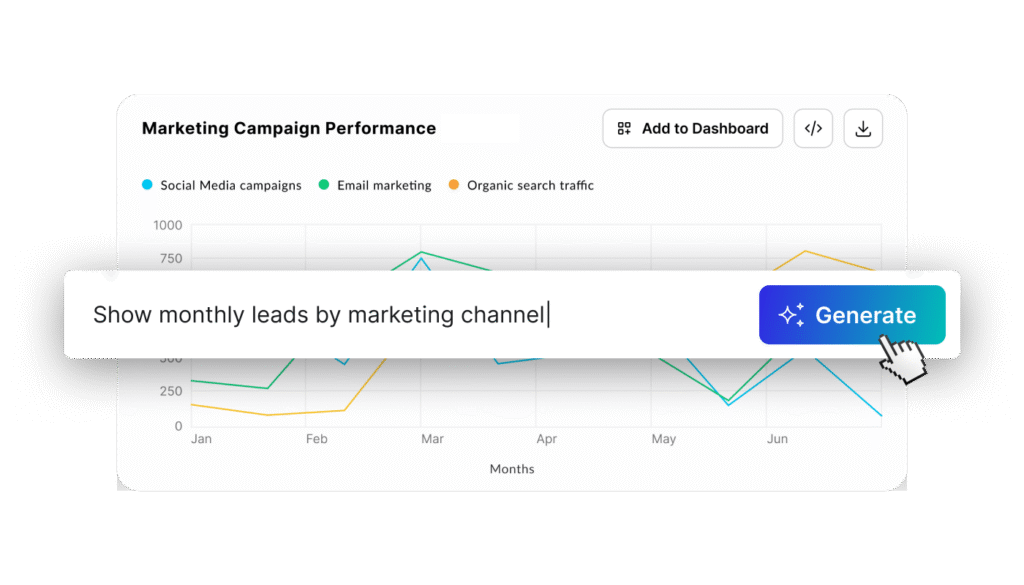
Healthcare teams can connect secure data sources, ask questions in plain English, and receive instant visual insights without needing SQL or technical expertise.
Natural Language Healthcare Queries
Users can ask questions like:
- Which departments had the highest patient volume last quarter
- Show readmission trends by age group
- What is the average claim processing time
Lumenn AI translates these questions into analytics instantly, helping teams move faster.
Secure Data Source Integration
Lumenn AI connects to enterprise databases and cloud environments while keeping data in place. This supports healthcare compliance and minimizes unnecessary data movement.

AI Powered Data Quality
The platform automatically checks for duplicates, null values, anomalies, and inconsistencies, helping organizations trust the insights they use for care and operations.

Self Service Dashboards
Teams can build and share dashboards for operations, finance, patient flow, and performance monitoring. Dashboards can refresh automatically to stay aligned with live healthcare data.

Explainable AI with Chain of Thoughts
Lumenn AI also supports transparent analytics by showing how insights were generated. This helps healthcare leaders validate logic and strengthen confidence in AI outputs.
Why AI in Healthcare Analytics Will Keep Growing
Healthcare data volumes continue to expand through electronic health records, wearable devices, telehealth systems, imaging platforms, and connected care technologies.
As this complexity grows, AI becomes essential for transforming raw information into decisions.
Organizations that adopt AI powered healthcare analytics will be better positioned to:
- Improve patient outcomes
- Reduce operational inefficiencies
- Increase financial visibility
- Strengthen compliance and governance
- Empower staff with faster insights
The future of healthcare depends on smarter use of data.
Final Thoughts
AI is improving healthcare data analytics by making insights faster, more accurate, and more accessible. It helps providers and administrators move beyond reactive reporting into proactive decision making.
From patient care to hospital operations, AI is becoming a core part of modern healthcare intelligence.
The organizations that succeed in 2026 and beyond will be those that combine human expertise with intelligent analytics platforms built for trust, speed, and scale.