

Healthcare organizations today generate massive amounts of data from patient records, diagnostic systems, wearables, and administrative workflows. Yet much of this data remains underutilized, locked in silos or analyzed manually through time-consuming processes.
AI-powered analytics is changing that. It enables healthcare providers, administrators, and researchers to extract actionable insights instantly, improving clinical outcomes, operational efficiency, and patient experience. Platforms like Lumenn AI are making this shift possible—bringing no-code, secure, and intelligent analytics to healthcare decision-makers.
The Shift from Traditional BI to AI-Powered Analytics
Traditional business intelligence tools often require technical skills, complex setup, and manual query building. In healthcare, where time and accuracy are critical, these limitations can slow down decision-making.
AI-powered analytics simplifies this by allowing professionals to ask questions in plain English and get immediate, data-backed answers. For instance, a hospital administrator can ask,
“Which departments experienced the highest patient readmission rates last month?”
Within seconds, Lumenn AI transforms that question into a live visualization—helping teams act faster and with confidence.
Why AI-Powered Analytics Matters in Healthcare
1. Better Patient Outcomes Through Predictive Insights
AI analytics helps healthcare professionals detect early signs of risk and predict outcomes. By analyzing patient history, lab results, and demographic data, it identifies patterns that signal potential issues such as readmission risks or disease progression.
2. Operational Efficiency Across Departments
Hospitals handle massive operational data—bed occupancy, supply chain metrics, scheduling, and cost tracking. AI-powered tools automate analysis and identify inefficiencies, enabling managers to optimize workflows and resource allocation.
3. Data-Driven Clinical Decisions
AI-powered analytics bridges the gap between clinical expertise and real-time data. Doctors and clinicians can visualize treatment outcomes, patient response rates, and medication impacts—leading to evidence-based decisions that enhance care quality.
4. Cost Optimization and Resource Planning
By highlighting inefficiencies and predicting future demand, AI analytics helps healthcare organizations reduce costs and make smarter budgeting decisions. It ensures the right resources reach the right departments at the right time.
How Lumenn AI Enables Smarter Healthcare Decisions
1. Natural Language Querying for Medical Data
With Lumenn AI, users can simply ask questions like:
- “Show patient admission trends by department.”
- “Which regions report higher preventive care success rates?”
- “How many patients were discharged within 24 hours last quarter?”
The system instantly generates charts, graphs, and summaries—no coding or BI experience required.
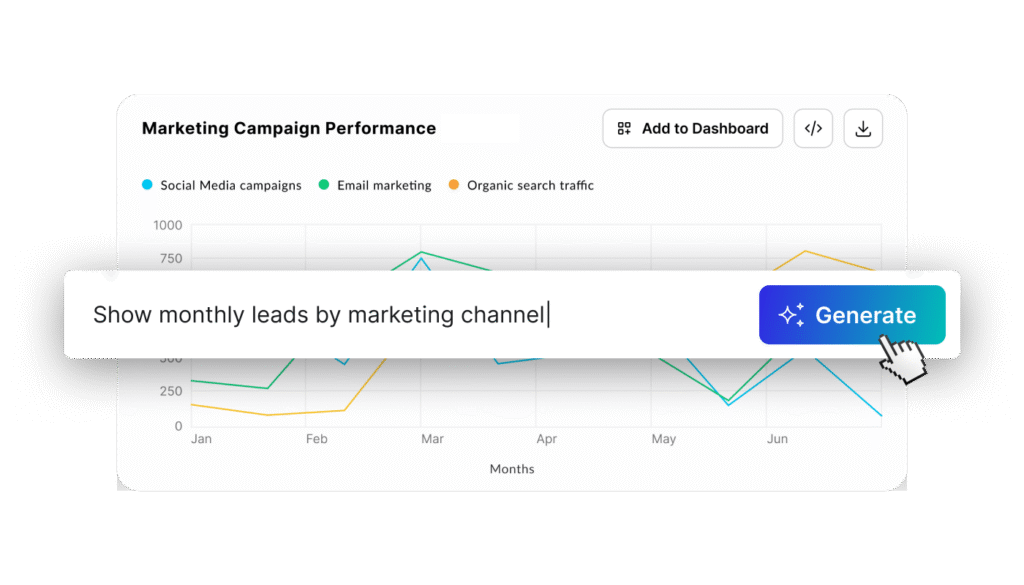
2. No-Code Dashboard Builder for Medical Teams
Lumenn AI enables healthcare teams to create real-time dashboards without coding. Clinicians and administrators can visualize patient outcomes, staff utilization, and performance metrics instantly. Dashboards update automatically, ensuring every decision is based on accurate, live data.

3. Secure Multi-Source Data Integration
Connect and analyze healthcare data from EHR, lab systems, and billing platforms securely. Lumenn AI integrates directly with databases like Snowflake, Redshift, and Azure SQL, performing in-place analytics to protect patient privacy and ensure compliance with healthcare standards.

4. AI Auto Analyst – Proactive Healthcare Intelligence
Lumenn AI’s Auto Analyst proactively scans healthcare data to suggest meaningful questions like “Which departments face longer patient wait times?” or “Where are costs rising?” It uncovers insights teams might miss, enabling faster, smarter, data-driven decisions.

5. AI-Powered Data Quality Checks
In healthcare, data accuracy can save lives. Lumenn AI automatically identifies duplicates, missing records, or inconsistent entries across datasets. Each dataset receives a Data Quality Score, ensuring clinical insights are built on trustworthy, complete data.

6. Enterprise-Grade Governance and Compliance
Lumenn AI provides robust governance through role-based access, encryption, and detailed audit logs. This ensures sensitive patient data remains secure and only accessible to authorized users. The platform’s built-in compliance framework supports HIPAA and GDPR standards.

Real-World Impact of AI Analytics in Healthcare
AI-powered analytics isn’t theoretical—it’s transforming outcomes across the healthcare ecosystem.
Hospitals: Reduce patient wait times and optimize resource use by predicting peak hours.
Pharmaceuticals: Analyze drug performance data to refine trials and improve R&D efficiency.
Insurance Providers: Detect fraudulent claims and assess risks more accurately.
Public Health Agencies: Monitor and predict outbreaks using demographic and temporal data trends.
The Future: Intelligent, Accessible, and Ethical Analytics
The future of healthcare analytics is about empowerment, not complexity. With intuitive, AI-driven tools like Lumenn AI, healthcare professionals can focus on what truly matters—patients and outcomes—while trusting technology to handle the data complexity behind the scenes.
As AI evolves, analytics will shift from dashboards to continuous intelligence, where systems learn, adapt, and recommend actions autonomously. The healthcare industry stands to gain more precise, faster, and ethical decision-making capabilities—improving lives at scale.
Conclusion
AI-powered analytics is revolutionizing healthcare by making data more accessible, actionable, and intelligent. From clinical diagnostics to operational efficiency, it gives professionals the power to see deeper, decide faster, and act with confidence.
With Lumenn AI, healthcare organizations can unlock this potential, combining no-code simplicity, secure integrations, and proactive intelligence into one unified platform.
