
Enterprise analytics is entering a new chapter. Traditional BI tools designed for specialists, dependent on ETL pipelines, and updated on schedules—are being complemented and in many cases replaced by intelligent systems that deliver faster, clearer outcomes for business users. At the heart of this transition is the rise of the No-Code Platform: software that combines natural language access, live connections to enterprise data, and AI automation so non-technical teams can generate reliable insights without hand-coding queries.
Organizations that adopt an AI-driven No-Code Platform gain speed, reduce engineering backlogs, and create a culture of data fluency across departments. The combination of live, in-place querying and AI assistance turns analytics from a report-generation exercise into a continuous decisioning system that supports real-time business operations.
Why the Traditional BI Model Is Reaching Its Limits
Historically, BI relied on dedicated data teams to build and maintain dashboards, ETL pipelines, and semantic layers. That model created bottlenecks: business users waited days or weeks for analysis, and valuable opportunities were missed while data was transformed and copied. Enterprise scale, modern data volume, and the demand for immediacy have exposed the shortcomings of this staged approach.
A modern No-Code Platform eliminates much of this friction. Instead of extracting and moving data, it queries data in place, applying AI to interpret user intent and generate optimized queries. This reduces duplication, shortens time-to-insight, and lets analysts focus on interpretation rather than plumbing. Industry research confirms that firms are accelerating investment in no-code and low-code approaches to unlock agility and scale.
What a Modern No-Code Platform Actually Does
A truly useful No-Code Platform combines several capabilities:
Natural Language and Conversational Access
Users ask questions in plain English and receive charts, tables, or narrative summaries. This lowers the barrier to entry and enables more people to explore data without SQL expertise.
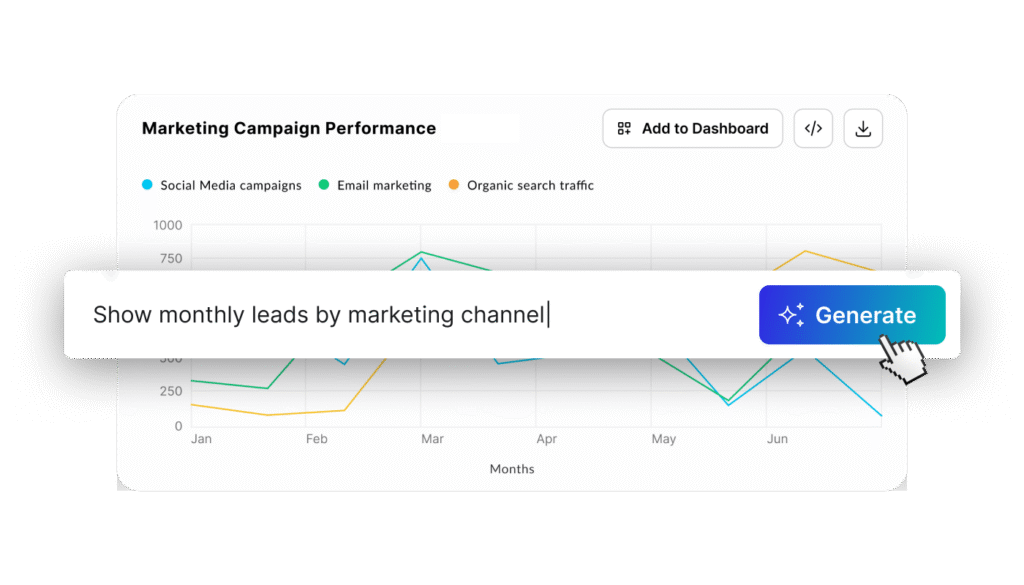
In-Place Querying & Live Dashboards
The platform queries data where it lives—data warehouses, lakes, or cloud storage, so dashboards reflect near real-time states without complex replication work.

AI-Powered Assistance
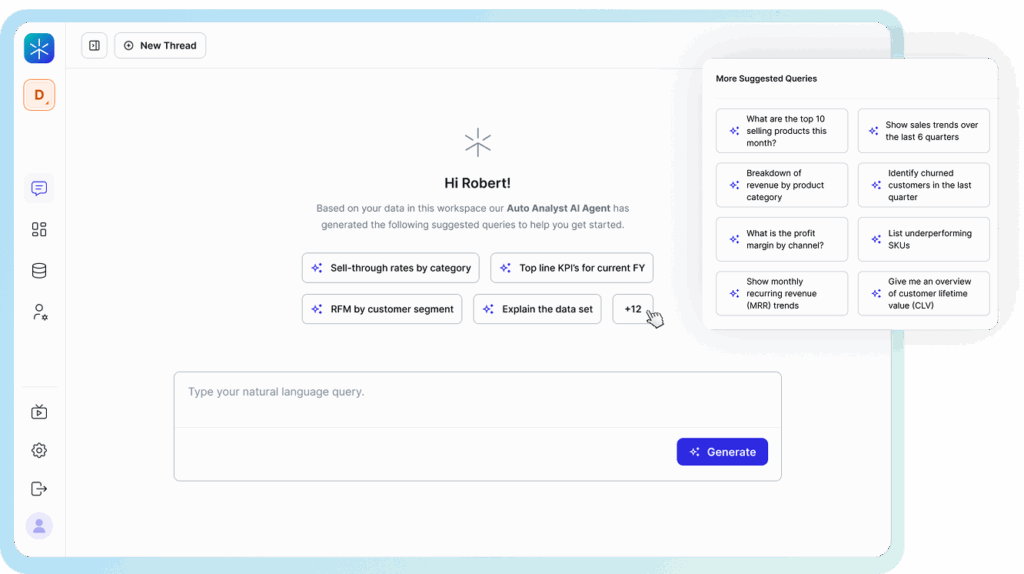
From translating intent into optimized queries to proactively surfacing data, AI shortens the path from question to action. An AI-driven No-Code Platform acts as both translator and guardrail, suggesting the right visuals.
Semantic Consistency & Governance
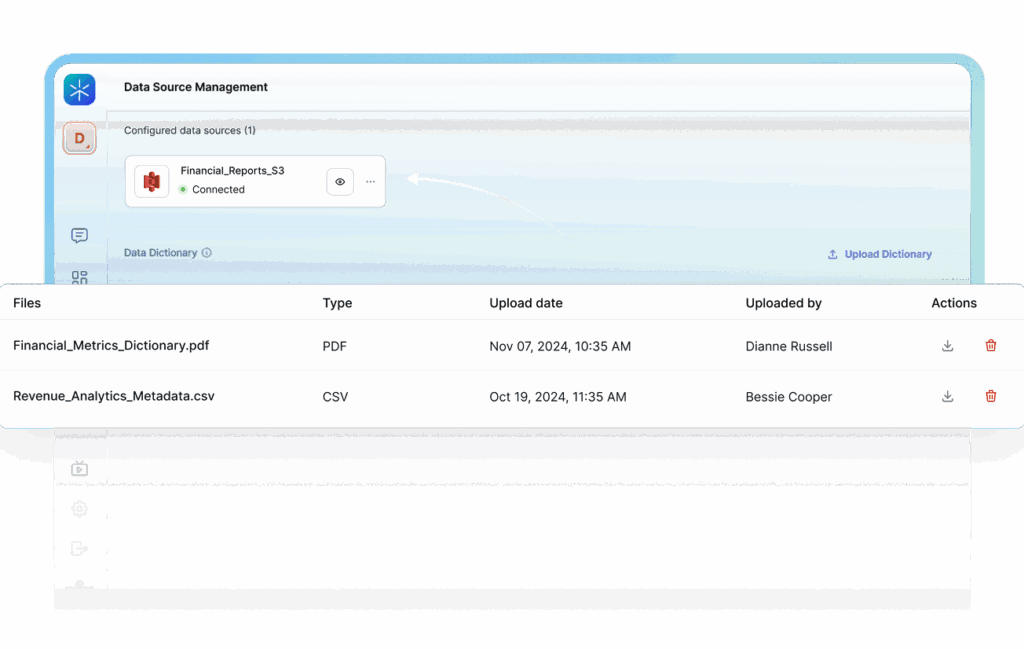
A built-in semantic layer or data dictionary maps business terms to technical fields, preventing misinterpretation while preserving governance. Robust role-based access and audit trails keep data secure even as access broadens.
When these elements work together, a No-Code Platform becomes an enterprise utility: reliable, fast, and safe for widespread use. Recent enterprise trend reports highlight the move to AI-powered, governance-first analytics strategies as central to digital transformation.
Business Impact — Faster, Cheaper, More Inclusive
Adopting an AI-driven No-Code Platform yields measurable benefits:
- Speed: Business users get answers in minutes rather than waiting for a BI queue.
- Cost: Reduced need for duplicate storage and fewer specialized development cycles lower total cost of ownership.
- Adoption: More stakeholders use data when tools match their skills; citizen-analyst programs scale naturally.
- Trust: Built-in governance, lineage, and quality checks increase confidence in results.
These outcomes are not theoretical. Companies embracing no-code analytics report faster experimentation cycles, lower operational overhead, and higher business adoption — key factors in staying competitive as markets accelerate.
Implementation Best Practices for a No-Code Platform
To realize its potential, deploying a No-Code Platform requires more than just activating connectors. Here are practical steps:
- Start with a high-value use case — revenue analysis, churn prediction, or campaign ROI.
- Connect data in place — prioritize secure connectors to your warehouse and cloud storage.
- Define a semantic layer — upload your data dictionary and business terms to avoid mismatches.
- Enable governance — role-based access, audit logging, and encryption must be enforced from day one.
- Train users — short, context-specific training empowers teams to ask better questions and interpret results.
- Monitor performance — in-place queries rely on source optimization; collaborate with data engineering to tune heavy queries.
This combination of technical and organizational practices ensures your No-Code Platform drives sustained value instead of short-term novelty.
What’s Next — Agents, Automation, and Decision Products
Looking ahead, No-Code Platforms will increasingly blend with agentic AI and automation. Instead of passive dashboards, systems will proactively execute monitoring, suggest interventions, and even trigger workflows when conditions warrant. Analytics will move toward “decision products”—packaged insights and actions designed for both humans and automated systems to consume.
For organizations, the implication is clear: adopting a No-Code Platform today lays the groundwork for tomorrow’s intelligent workflows and agentic orchestration, enabling faster, safer, and more autonomous operations. Industry leaders are already piloting agent frameworks and cross-agent orchestration to accelerate this shift.
Why Lumenn AI — A No-Code Platform Built for Enterprise Intelligence
Lumenn AI is purpose-built to be your enterprise No-Code Platform for the AI era. We combine:
- Natural language querying for non-technical users
- Secure, in-place connections to major data platforms
- AI Auto Analyst that proactively surfaces signals and anomalies
- A semantic layer to align business terms with data fields
- Enterprise governance: RBAC, audit logs, and end-to-end encryption
With Lumenn AI you move from passive dashboards to an active decisioning layer that empowers everyone in the organization to explore, trust, and act on data.
Conclusion
The future of enterprise analytics is not more dashboards — it’s smarter, faster, and more inclusive intelligence. A modern No-Code Platform brings AI, governance, and usability together so organizations can make better decisions, faster.