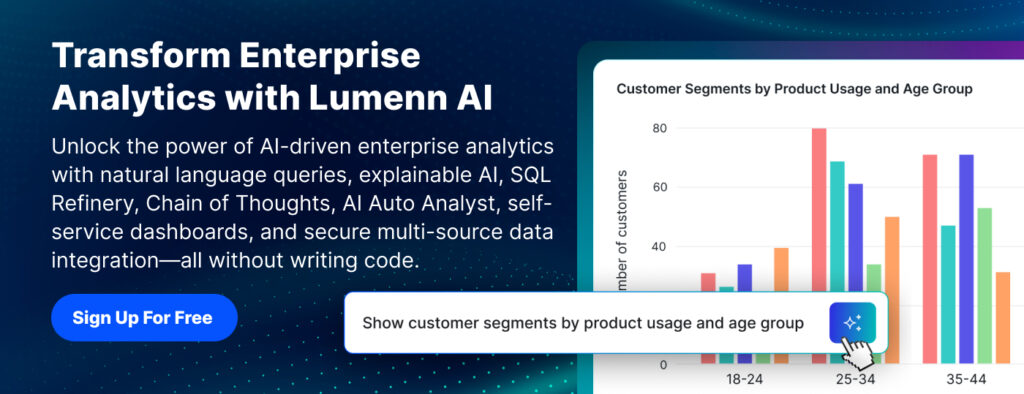

Enterprise analytics is evolving faster than ever. Businesses no longer want platforms that simply create reports—they expect AI-powered analytics that delivers real-time insights, natural language querying, automated visualizations, and explainable intelligence. As organizations continue investing in AI, choosing the right analytics platform has become a strategic decision that directly impacts productivity, decision-making, and business growth.
Whether you’re a growing business looking for self-service analytics or an enterprise managing data across multiple systems, selecting the right platform can help transform raw data into actionable intelligence.
In this guide, we explore the top five Enterprise AI analytics platforms to consider in 2026, comparing their strengths, ideal use cases, and key capabilities.
1. Lumenn AI
AI-Powered Enterprise Analytics for Every Business User
Lumenn AI is a modern, no-code enterprise analytics platform designed to make business intelligence accessible to everyone. Instead of relying on technical teams to write SQL or build reports, users can simply ask questions in natural language and receive AI-generated insights, interactive visualizations, and dashboards within seconds.
Built specifically for enterprise environments, Lumenn AI combines conversational analytics with explainable AI, enabling organizations to explore live enterprise data while maintaining governance and security.
Key Features
- Natural language business queries
- AI-generated charts and dashboards
- SQL Refinery for refining AI-generated SQL using natural language
- Chain of Thoughts for transparent AI reasoning
- AI Auto Analyst for proactive query suggestions
- AI-powered Data Quality checks
- Multi-source data connectivity
- Enterprise Data Dictionary
- Role-based security and audit logs
Best For
Organizations looking for an AI-first analytics platform that combines self-service BI, explainable AI, and enterprise-grade security without requiring coding expertise.
2. Microsoft Power BI
Comprehensive Analytics for the Microsoft Ecosystem
Power BI continues to be one of the most widely adopted business intelligence platforms. It integrates well with Microsoft products and offers powerful reporting and dashboard capabilities.
Its AI-powered features help users generate insights, forecast trends, and build interactive reports while supporting enterprise-scale deployments.
Key Features
- Interactive dashboards
- AI-powered visual analysis
- Integration with Microsoft 365
- Data modeling capabilities
- Large ecosystem of connectors
Best For
Organizations already invested in the Microsoft ecosystem that require advanced reporting and enterprise business intelligence.
3. Tableau
Advanced Data Visualization for Analytics Teams
Tableau is recognized for its rich visualization capabilities and flexible dashboard design. It enables analysts to build highly interactive reports while exploring complex datasets through visual analytics.
The platform continues expanding its AI capabilities to simplify insight generation and improve data exploration.
Key Features
- Advanced visualizations
- Interactive dashboards
- AI-assisted analytics
- Broad data connectivity
- Enterprise reporting
Best For
Organizations that prioritize advanced visualization and have dedicated analytics teams.
4. ThoughtSpot
Search-Driven Analytics for Business Users
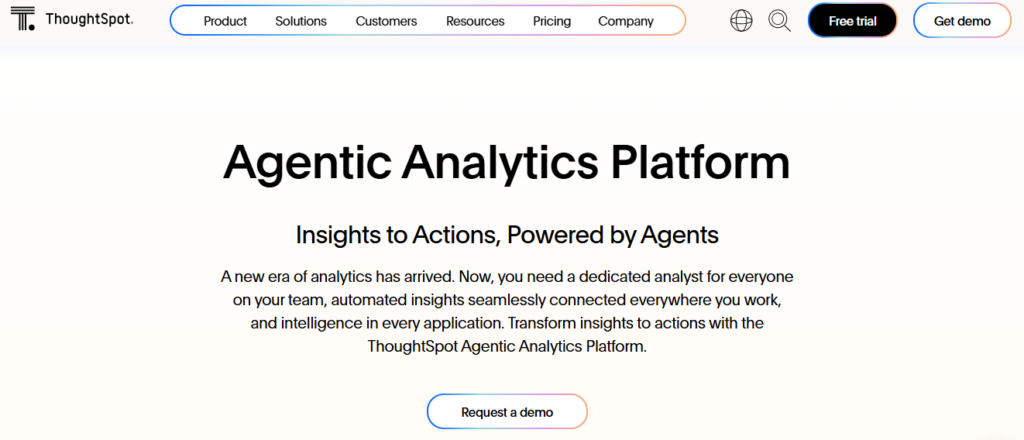
ThoughtSpot focuses on search-based analytics, allowing users to explore data using natural language search. It aims to reduce dependence on technical teams while helping users quickly uncover trends and business insights.
Its AI capabilities assist users with automated recommendations and interactive data exploration.
Key Features
- Search-driven analytics
- AI-generated insights
- Interactive dashboards
- Cloud-native architecture
- Embedded analytics
Best For
Businesses seeking search-first analytics with self-service capabilities.
5. Zoho Analytics
Affordable Business Intelligence for Growing Organizations
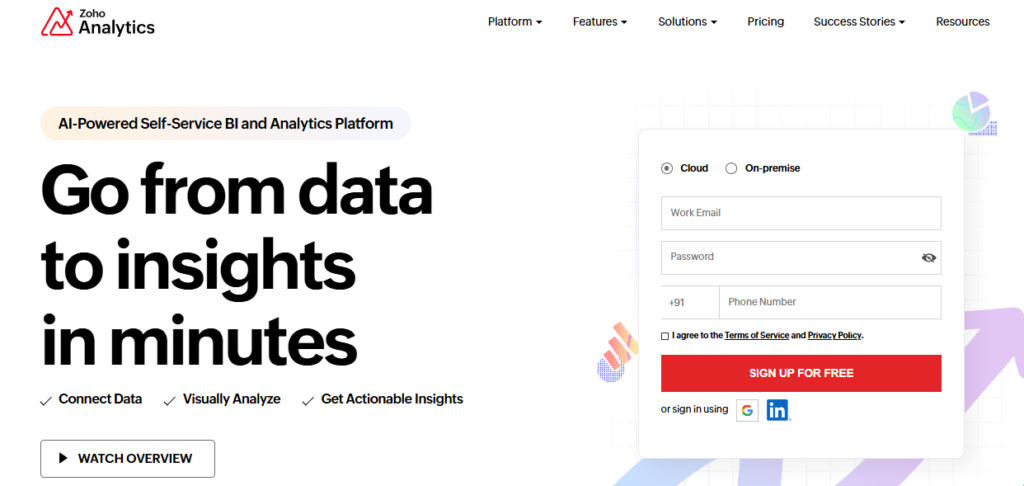
Zoho Analytics provides cloud-based business intelligence with reporting, dashboards, and AI-assisted analytics. It offers a wide range of integrations and is particularly attractive for small and mid-sized organizations looking for cost-effective analytics.
Its drag-and-drop interface makes dashboard creation relatively straightforward for business users.
Key Features
- Self-service reporting
- AI assistant for analytics
- Dashboard creation
- Multiple data connectors
- Scheduled reporting
Best For
Small and medium-sized businesses looking for an affordable analytics platform with built-in AI capabilities.
How to Choose the Right Enterprise AI Analytics Platform
Choosing an analytics platform depends on more than just dashboards. Consider the following before making your decision:
Evaluate Ease of Use
Look for a platform that enables business users to analyze data without requiring SQL or technical expertise.
Check AI Capabilities
Modern analytics platforms should provide:
- Natural language querying
- AI-generated insights
- Explainable AI
- Intelligent recommendations
Prioritize Data Connectivity
Your platform should integrate with your existing databases, cloud warehouses, and storage platforms without complex migration projects.
Ensure Enterprise Security
Look for features such as:
- Role-based access control
- Encryption
- Audit logs
- Governance capabilities
Consider Scalability
The platform should support growing data volumes, multiple departments, and enterprise-wide adoption without sacrificing performance.
Why AI-First Analytics Is the Future
Enterprise analytics is shifting from static dashboards to intelligent decision-making platforms. Businesses now expect analytics solutions that not only answer questions but also explain the reasoning behind insights, proactively suggest opportunities, and allow users to refine analysis without technical complexity.
Platforms that combine conversational AI, transparency, and enterprise governance will lead the next generation of business intelligence.
Lumenn AI is built around this vision by empowering every business user—not just data analysts—to explore enterprise data confidently through natural language, while providing features like SQL Refinery, Chain of Thoughts, AI Auto Analyst, Data Quality, and secure multi-source connectivity.
Final Thoughts
The best analytics platform is the one that aligns with your organization’s data maturity, business goals, and user needs.
If your priority is traditional reporting, platforms like Power BI, Tableau, ThoughtSpot, and Zoho Analytics continue to offer strong capabilities. However, if you’re looking for an AI-first, no-code enterprise analytics platform that emphasizes transparency, explainability, and self-service intelligence, Lumenn AI offers a modern approach designed for today’s enterprises.
As AI continues to reshape business intelligence in 2026, organizations that invest in intelligent, explainable, and user-friendly analytics platforms will be better positioned to make faster, more confident decisions.