

Business Intelligence (BI) is evolving rapidly as organizations move toward AI-driven analytics, self-service data exploration, and real-time decision intelligence. In 2026, BI tools are no longer just reporting platforms—they are strategic systems that help businesses automate insights, empower non-technical teams, and accelerate data-driven decision-making.
Modern BI platforms combine data integration, visualization, natural language querying, and AI-driven automation to reduce dependency on technical teams. Organizations evaluating BI tools today are prioritizing usability, scalability, AI capabilities, and security.
This blog explores some of the top Business Intelligence tools to consider in 2026, including Lumenn AI and other widely adopted platforms.
What Makes a Modern BI Tool in 2026?
Before exploring the tools, it is important to understand what defines a modern BI platform.
Key capabilities include:
- Self-service analytics for non-technical users
- Real-time or near real-time data insights
- AI-driven automation and recommendations
- Strong visualization and dashboarding capabilities
- Secure enterprise data connectivity
- Natural language query support
Many platforms now focus on reducing manual data preparation and enabling business users to generate insights independently.
Top BI Tools to Consider in 2026
Lumenn AI
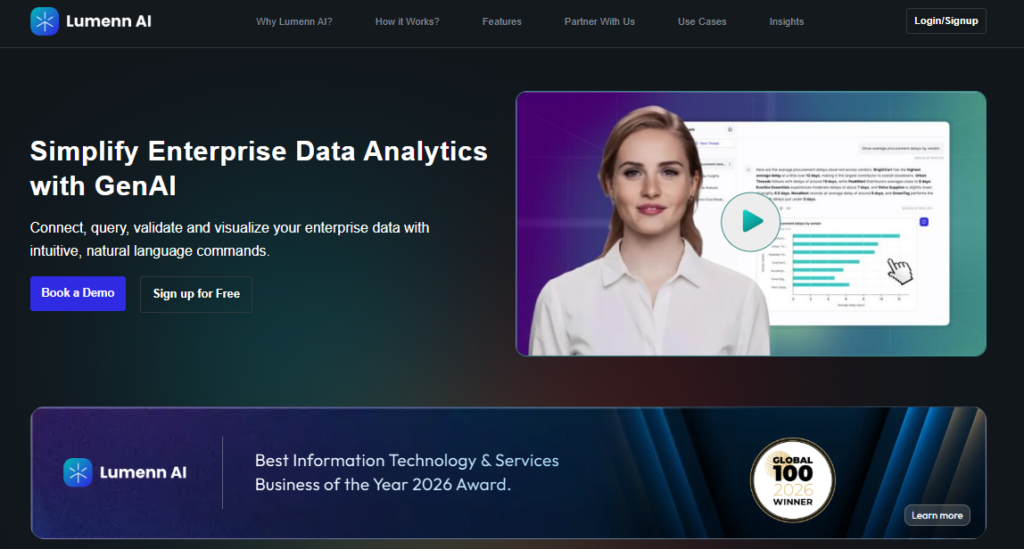
Lumenn AI is an AI-powered enterprise analytics platform designed to democratize data access across organizations. It enables users to query enterprise data using natural language and instantly generate dashboards, visualizations, and insights—without coding or SQL knowledge.
Key Capabilities:
- Natural language analytics and visualization generation
- In-place analytics with secure database connectivity
- Self-service dashboards with live data refresh
- AI Auto Analyst for automated insight discovery
- SQL Refinery for refining AI-generated queries using natural language
- Data quality monitoring and data dictionary integration
Why Organizations Choose Lumenn AI:
Lumenn AI focuses on making enterprise analytics accessible to business users while maintaining governance, security, and data accuracy. It is especially valuable for organizations looking to reduce BI tool complexity and speed up decision cycles.
Microsoft Power BI
Power BI is widely used for enterprise reporting and dashboarding. It integrates deeply with the Microsoft ecosystem and supports strong visualization and data modeling capabilities.
Key Strengths:
- Strong integration with Microsoft tools
- Extensive visualization library
- Enterprise reporting capabilities
- Cloud and on-premise deployment options
Best For:
Organizations heavily invested in Microsoft infrastructure.
Tableau
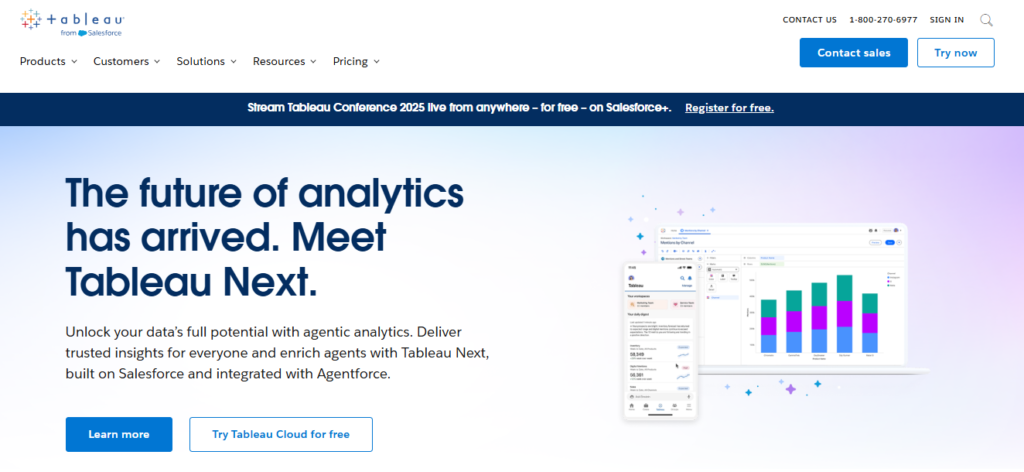
Tableau is known for its strong visualization engine and intuitive dashboard creation. It is widely used for data storytelling and advanced analytics visualization.
Key Strengths:
- Industry-leading visual analytics
- Strong data exploration capabilities
- Large user community and ecosystem
Community discussions often describe it as a leading visualization platform that transforms raw data into understandable insights.
Best For:
Data analysts and teams focused on visual storytelling.
Qlik
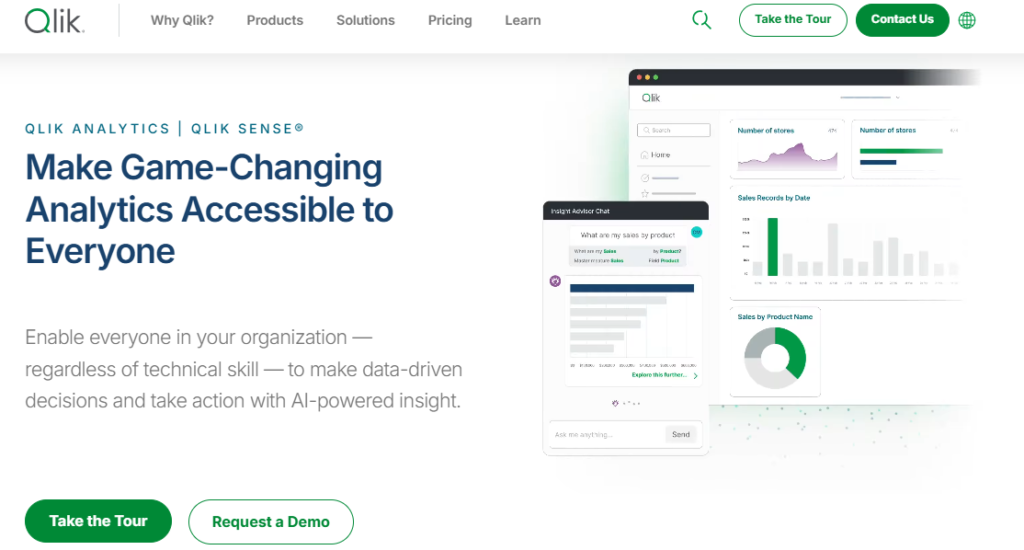
Qlik provides associative analytics that allows users to explore data relationships dynamically. It supports guided analytics and self-service dashboards.
Key Strengths:
- Associative data engine
- Strong self-service analytics
- Embedded analytics support
Community listings often place Qlik among major BI platforms supporting dashboards and guided analytics workflows.
Best For:
Organizations needing flexible data exploration and embedded analytics.
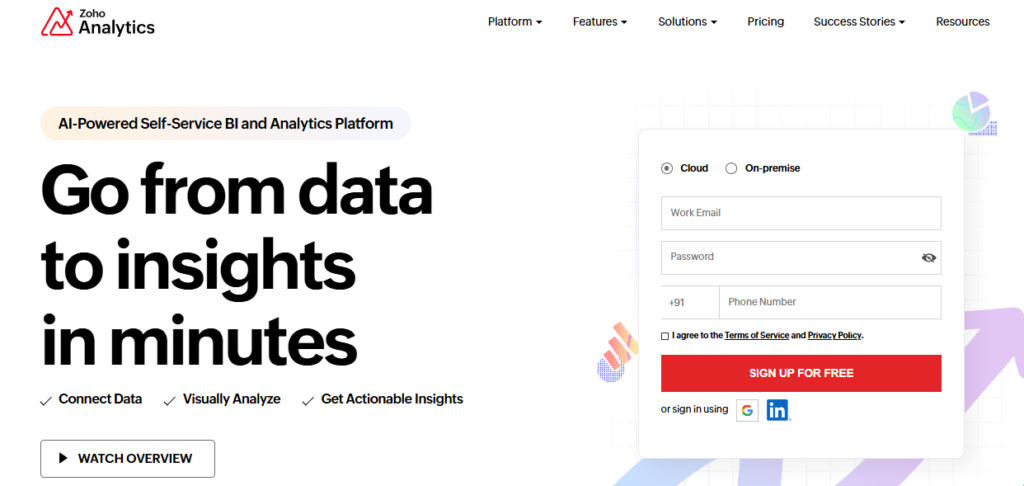
Zoho Analytics
Zoho Analytics is a cloud BI platform focused on ease of use and affordability, especially for mid-sized businesses.
Key Strengths:
- Easy dashboard and report creation
- Cloud-first deployment
- Integration with business apps
It is often described as an online BI service for creating reports and dashboards easily.
Best For:
Small and mid-sized businesses needing quick BI adoption.
Sisense
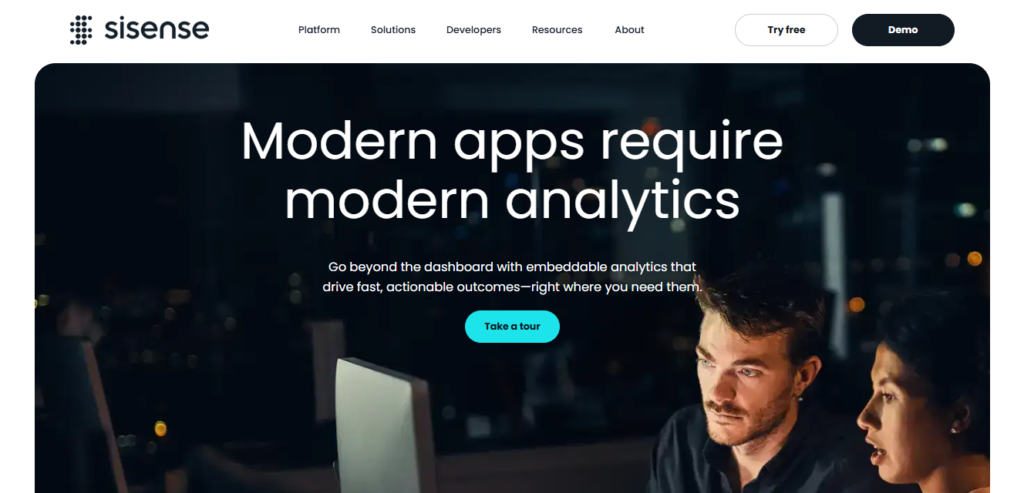
Sisense focuses on embedded analytics and product analytics use cases. It is commonly used by companies building analytics into customer-facing products.
Key Strengths:
- Strong embedded analytics capabilities
- Scalable data processing
- Developer-friendly architecture
Best For:
Product companies embedding analytics into applications.
How to Choose the Right BI Tool in 2026
In 2026, choosing a BI tool is no longer just about dashboards—it’s about enabling faster, smarter decision-making across the entire organization. The best platforms combine AI, automation, and self-service analytics into a unified experience.
Organizations should prioritize tools that remove friction between data and decision-making.
What Modern BI Buyers Should Look For:
Business User Accessibility
Analytics should be usable by product, finance, and operations teams—not just data specialists.
Intelligent Insight Generation
Look for platforms that not only visualize data but also suggest insights, trends, and anomalies automatically.
Unified Data Experience
The BI tool should integrate product data, customer data, financial metrics, and operational data into one analytics layer.
Explainability and Transparency
Teams should be able to understand how insights are generated, improving trust in AI-driven analytics.
Future-Ready Architecture
Choose platforms designed for AI-native analytics, real-time processing, and scalable cloud data environments.
Why AI-Native BI Platforms Are Gaining Adoption
Organizations are moving toward AI-native BI because they:
- Reduce dependency on data teams
- Enable faster experimentation
- Improve decision speed
- Increase data adoption across business teams
AI-driven BI platforms allow business teams to focus on decisions rather than data preparation.
Final Thoughts
The BI landscape in 2026 is defined by automation, AI-driven insights, and self-service analytics. While traditional BI tools remain powerful, modern AI-native platforms are changing how organizations interact with data.
Choosing the right BI tool depends on your organization’s data maturity, team structure, and decision-making speed requirements. Companies that invest in accessible, AI-powered analytics platforms will be better positioned to compete in a data-driven economy.