
Enterprises today generate more data than ever before. From transactional systems and customer platforms to operational logs and cloud storage, data is everywhere. Yet, despite this abundance, many organizations still struggle to turn enterprise data into clear, actionable insights that drive faster and better decisions.
The challenge isn’t access to data—it’s transforming raw, complex information into insights that business teams can understand, trust, and act on. This article explores how enterprises can bridge that gap and build a modern analytics approach that converts data into real business value.
Why Enterprise Data Often Fails to Deliver Insights
Before discussing solutions, it’s important to understand why enterprise data frequently remains underutilized.
1. Data Is Siloed Across Systems
Enterprise data typically lives in multiple databases, warehouses, and cloud platforms. When teams cannot analyze data holistically, insights remain fragmented and incomplete.
2. Analytics Depends on Technical Teams
Traditional BI workflows require SQL expertise, complex dashboards, and long turnaround times from data teams. As a result, business users often wait days—or weeks—for answers.
3. Data Quality and Trust Issues
If data contains duplicates, missing values, or inconsistencies, users lose confidence in analytics. Without trust, insights don’t lead to action.
4. Insights Are Hard to Interpret
Even when reports are available, static dashboards and overly technical visuals often fail to clearly explain what changed, why it matters, and what to do next.
Turning enterprise data into actionable insights requires solving all of these challenges together—not in isolation.
What Are Actionable Insights?
Actionable insights go beyond charts and numbers. They are insights that:
- Clearly answer a business question
- Are trusted and based on reliable data
- Are easy to understand by non-technical users
- Lead directly to a decision or next step
For example, “Sales dropped by 12% last quarter” is information.
“Sales dropped by 12% in the Northeast due to reduced customer retention—prioritizing retention campaigns could recover revenue” is an actionable insight.
Step 1: Centralize Access to Enterprise Data
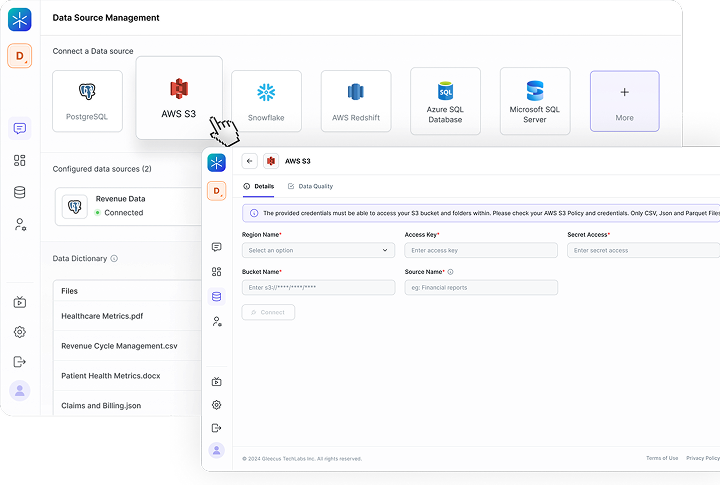
The first step toward actionable insights is enabling unified access to enterprise data.
Modern analytics platforms allow organizations to connect directly to existing databases and cloud storage without moving data. This approach—often referred to as in-place analytics—ensures:
- Real-time access to up-to-date data
- Reduced data duplication and security risks
- Faster onboarding of new data sources
By analyzing data where it already lives, enterprises preserve governance while enabling broader access to insights.
Step 2: Make Analytics Accessible with Natural Language
One of the biggest barriers to insight generation is technical complexity. When only analysts can query data, most business questions go unanswered.
Natural language analytics changes this dynamic.
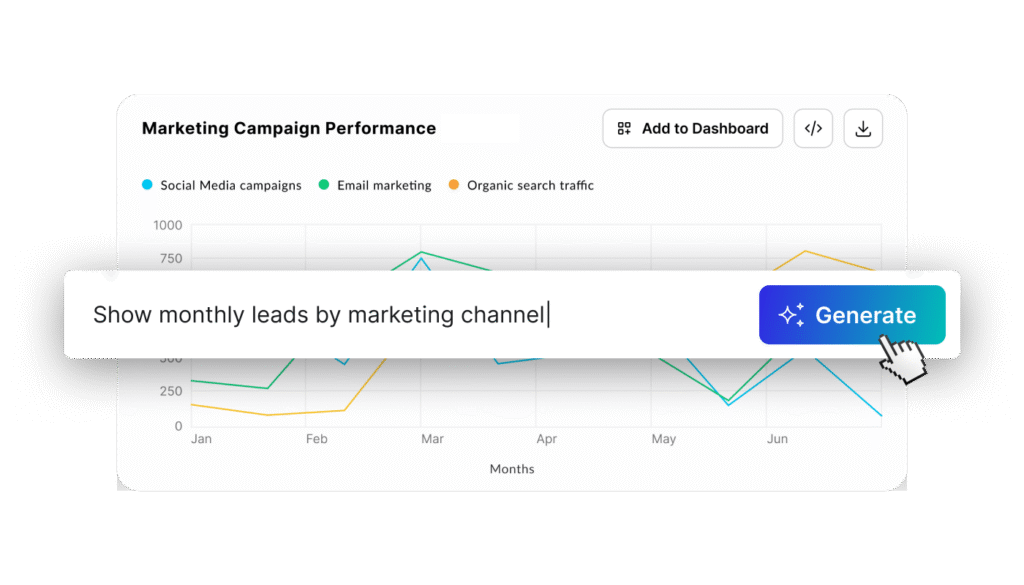
Instead of writing SQL or navigating complex dashboards, users can simply ask questions like:
- “What were our top-performing regions last quarter?”
- “Which products are driving the highest margins?”
- “Where are costs increasing fastest this month?”
AI-powered analytics translates these questions into accurate queries and returns both visualizations and explanations. This democratization of analytics enables every team—sales, finance, operations, marketing—to explore data independently and generate insights on demand.
Step 3: Ensure Data Quality and Trust
Insights are only as good as the data behind them.
Enterprise analytics must include built-in mechanisms to evaluate data quality across dimensions such as:
- Completeness (missing values)
- Uniqueness (duplicates)
- Accuracy (invalid or inconsistent values)
- Anomalies and outliers
When users can see quality scores and drill down into column-level or row-level issues, trust in analytics increases. Trusted data leads to confident decisions—and confident decisions drive action.

Step 4: Add Business Context with a Data Dictionary
One often overlooked reason insights fail to resonate is lack of context.
Terms like “revenue,” “active user,” or “churn” may mean different things across teams. Without shared definitions, analytics results can be misunderstood or misused.
A Data Dictionary solves this problem by embedding business meaning directly into analytics. By defining metrics, fields, and terminology in plain English, enterprises ensure that:
- AI interprets data correctly
- Insights align with business intent
- Teams work from a shared understanding of metrics
Context-aware analytics reduces errors, prevents misinterpretation, and makes insights far more actionable.

Step 5: Move from Static Reports to Interactive Exploration
Static reports answer yesterday’s questions. Actionable insights require interactive exploration.
Modern analytics platforms allow users to:
- Ask follow-up questions instantly
- Change filters and time ranges dynamically
- Compare metrics across dimensions
- Explore anomalies and trends in real time
This interactive approach enables users to move from “what happened” to “why it happened” and “what should we do next” within minutes.
Step 6: Organize Insights into Live Dashboards
Insights become more powerful when they’re organized and shared.
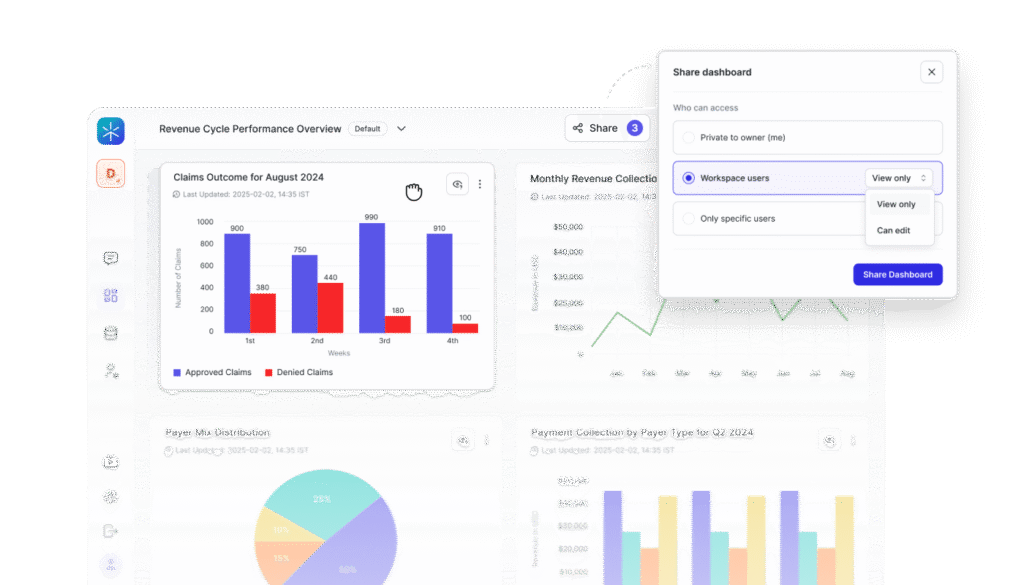
Dashboards allow teams to collect key visualizations generated during analysis and monitor them over time. Unlike static dashboards, modern dashboards:
- Stay connected to live data
- Refresh automatically at defined intervals
- Support manual refresh for instant updates
- Allow controlled sharing across teams
By combining multiple insights into a single view, dashboards help leaders track performance, identify risks, and act quickly.
Step 7: Enable Proactive Insights with AI Assistance
The next evolution of enterprise analytics is proactive intelligence.
Instead of waiting for users to ask questions, AI can analyze datasets and suggest meaningful queries automatically. These AI-driven suggestions help users:
- Discover insights they didn’t think to ask about
- Identify unusual patterns or trends early
- Get started faster when exploring new datasets
Proactive analytics transforms data exploration from reactive reporting into continuous insight discovery.

Turning Insights into Action: The Final Mile
Even the best insights fail if they don’t lead to action. To close the loop, enterprises should ensure that insights are:
- Easy to share with stakeholders
- Exportable for presentations and reports
- Tied to business workflows and decision processes
When insights are accessible, trusted, and clearly explained, teams are far more likely to act on them.
The Future of Enterprise Analytics
Turning enterprise data into actionable insights is no longer about building more dashboards or hiring more analysts. It’s about creating an analytics experience that is:
- AI-powered
- No-code and accessible
- Context-aware and trustworthy
- Fast, interactive, and proactive
Enterprises that embrace this approach empower every employee to engage with data, make informed decisions, and drive measurable business outcomes.
Final Thoughts
Enterprise data holds immense potential—but only if it’s transformed into insights people can understand and use. By combining unified data access, natural language analytics, data quality, business context, and AI-driven exploration, organizations can finally unlock the full value of their data.
Actionable insights don’t just inform decisions—they accelerate them.