
In today’s fast-moving business world, you shouldn’t have to wait for analysts or wrestle with complicated SQL queries to get answers. With Natural Language Analytics, you can simply ask your data a question and get clear, visual answers right away.
At Lumenn AI, our no-code Enterprise Analytics platform brings this power to life for business teams. In this blog, we’ll dive into what Natural Language Analytics is, why it’s a game-changer, and how it’s helping organizations unlock, understand, and act on their data with ease.
What Is Natural Language Analytics?
Natural Language Analytics (NLA) lets you interact with your data using everyday language, no coding or complex queries needed. Imagine asking, “What was last month’s revenue by region?” and instantly seeing a chart, graph, or table with the answer.
This approach makes data accessible to everyone, reduces reliance on IT teams, and boosts data literacy across your organization, turning insights into action faster than ever.
Why Natural Language Analytics Functions as a Game-Changer
Reduces Analytics Bottlenecks
Traditional business intelligence workflows can slow things down, with teams waiting on technical experts or IT to create reports. With NLA, those delays vanish. You can type a question like “Show me Q2 sales by region” and get answers in seconds, not days. This speed ensures you don’t miss critical opportunities while waiting for insights.
Accelerates Decision-Making
In a data-driven world, speed is everything. NLA lets you test ideas and explore scenarios quickly, without getting stuck on technical details. Whether you’re a marketing manager checking campaign performance or a supply chain leader tracking delays, NLA helps you experiment and make decisions fast, keeping your business agile and competitive.
Improves Data Literacy
Traditional analytics tools can feel intimidating for non-technical folks. NLA changes that by using plain language, making data approachable for everyone. Sales managers, HR leaders, or finance executives can ask questions and understand insights without needing to know SQL. This opens up analytics to all teams, fostering a culture where data drives decisions.
The Key Elements of Effective Natural Language Analytics
Conversational Interface with Data
At its core, NLA translates your everyday questions into structured database queries. This conversational approach eliminates the learning curve of traditional tools, making it easy for anyone to connect with their data.
Smart, Context-Aware Insights
Great NLA doesn’t just pick up keywords—it understands your business context. It recognizes your intent, metrics, and industry-specific terms to deliver insights that are accurate and relevant to your goals.
Visuals and Stories, Not Just Numbers
Numbers alone don’t tell the whole story. Modern NLA platforms pair query results with charts, dashboards, and narrative explanations. This helps you see not just the “what” but also the “why,” making insights clear and actionable for everyone, whether they’re technical or not.
Built on Trustworthy Data
NLA is only as good as the data it uses. By integrating with metadata and data dictionaries, it ensures your queries align with your business definitions. With strong enterprise-grade governance, you can trust that your insights are accurate and reliable.
How Lumenn AI Powers Natural Language Analytics
Ask Questions, Get Insights Instantly
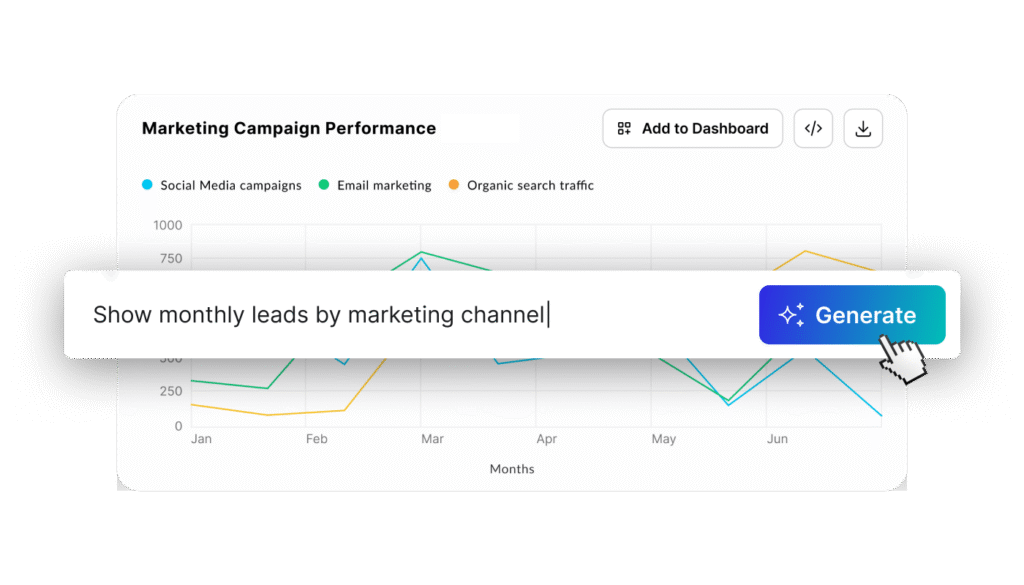
With Lumenn AI, you can ask something like “What were our top-selling products this quarter?” and get clear charts, tables, or dashboards in seconds. No SQL needed. This frees you from relying on BI teams and empowers you to act quickly.
Self-Service Dashboards
Turn your questions into self-service dashboards that update with live data. Lumenn AI lets you share dashboards with your team or keep them private, making analytics as easy as chatting with a colleague.

Quality You Can Trust
Insights are only as good as the data behind them. Lumenn AI runs AI-powered data quality checks to flag anomalies, duplicates, and missing values. By ensuring clean, reliable datasets, it gives users confidence that every decision is backed by accurate information.

Secure, Scalable, and Integrated
Lumenn AI connects effortlessly with leading data sources like Snowflake, Redshift, SQL databases, and cloud storage systems. With role-based access, audit trails, and encryption, it scales with your needs while keeping your data secure.

Use Cases: Natural Language Analytics in Action
- Sales Management: Quickly spot top-performing products, track revenue trends by region, or compare forecasts to actuals with simple questions.
- Marketing Teams: Analyze campaign ROI, find the best-performing channels, or segment customers without complex dashboards.
- Operations: Monitor production delays, inventory levels, or cost variances in real time to keep things running smoothly.
- Executive Reporting: Get high-level summaries like “Show me last quarter’s growth” with AI-driven visuals and commentary.
- HR & People Metrics: Let HR leaders explore workforce trends like turnover or headcount distribution using everyday language.
Future Outlook: The Role of Natural Language Analytics
NLA is evolving with next-generation AI, creating intelligent assistants that proactively suggest insights, spot anomalies, and deliver tailored visualizations. As AI advances, NLA will become even more intuitive, blending seamlessly into the tools you already use, moving business intelligence toward ambient intelligence.