
Retail analytics has become a real game-changer for retailers who want to stay competitive. It’s all about gathering, digging into, and making sense of data from across your retail world to predict what customers will do next, streamline your inventory, and ultimately boost your bottom line. In today’s fast-paced environment with omnichannel shopping, shifting customer tastes, and trends that come and go in a blink, the retailers who truly leverage analytics are the ones pulling ahead. Here at Lumenn AI, we truly believe that the right analytics platform can turn your raw data into smart, actionable strategies quickly, reliably, and without needing a ton of tech know-how.
What Is Retail Analytics & Why It Matters
What Does Retail Analytics Cover?
Retail analytics covers every data touchpoint in retail: sales, inventory, supply chain, customer interactions (in-store & online), marketing campaigns, returns, and more. It helps retailers understand what sells, where, why, and at what price. It’s more than reports; it’s actionable intelligence.
Key Benefits of Retail Analytics
- Better Inventory Management — Reduce overstocking, cut waste, and ensure top-selling items are always available.
- Sharper Marketing & Pricing Decisions — Use customer and competitor insights to refine campaigns and maximize ROI.
- Operational Efficiency — Detect bottlenecks across supply chains and stores early.
- Improved Customer Satisfaction — Deliver personalized offers and optimized product mixes that drive loyalty.
Current Trends in Retail Analytics
Omnichannel Data Integration
Customers today interact both online and in stores. Retail analytics is trending toward integrating data from all these channels to get a unified view of behavior. Tools are no longer just for the e-commerce team, they must serve store operations, supply chain, marketing, and even customer support.
Real-Time & Predictive Retail Analytics
The big shift is toward analytics that give you instant visibility into things like stock levels, foot traffic, and how your campaigns are performing. But it doesn’t stop there—it’s also about predictive insights that tell you not just what happened, but what’s likely to happen next. Retailers who use these forward-looking signals to optimize their supply chains or inventory are seeing some impressive results.
Self-Service & AI-Assisted Insights
Today’s retail analytics tools are all about making things user-friendly. They let non-tech-savvy folks ask questions, poke around in dashboards, catch unusual patterns, or dive deeper into data without needing to know BI tools or SQL. Plus, AI steps in with handy features like spotting trends or sending alerts for anomalies, making the whole process even smoother.
Common Retail Analytics Use Cases
Here are practical ways retailers are using retail analytics:
| Use Case | What Retailers Do |
|---|---|
| Inventory Optimization | Forecast demand, reorder popular and seasonal items, reduce overstock and markdowns. |
| Marketing Campaign Analysis | Compare performance of campaigns by channel, adjust budget allocation, personalize messaging. |
| Store Performance & Layout | Analyze which locations or store sections perform best; optimize product placement. |
| Customer Segmentation & Personalized Offers | Group customers by behavior, deliver tailored deals or loyalty programs. |
| Supply Chain & Fulfillment Efficiency | Spot delays, supplier performance issues, and optimize inbound/outbound operations. |
Challenges in Implementing Retail Analytics
- Data Quality & Fragmentation – Inconsistent or missing data from POS, e-commerce, and loyalty systems weaken insights.
- Technical Complexity – Traditional BI tools often require SQL and IT support, slowing decision-making.
- Scalability & Real-Time Needs – Retailers need analytics that scales across channels and keeps pace with changing demand.
How Lumenn AI Elevates Retail Analytics Workflows
Natural Language Queries
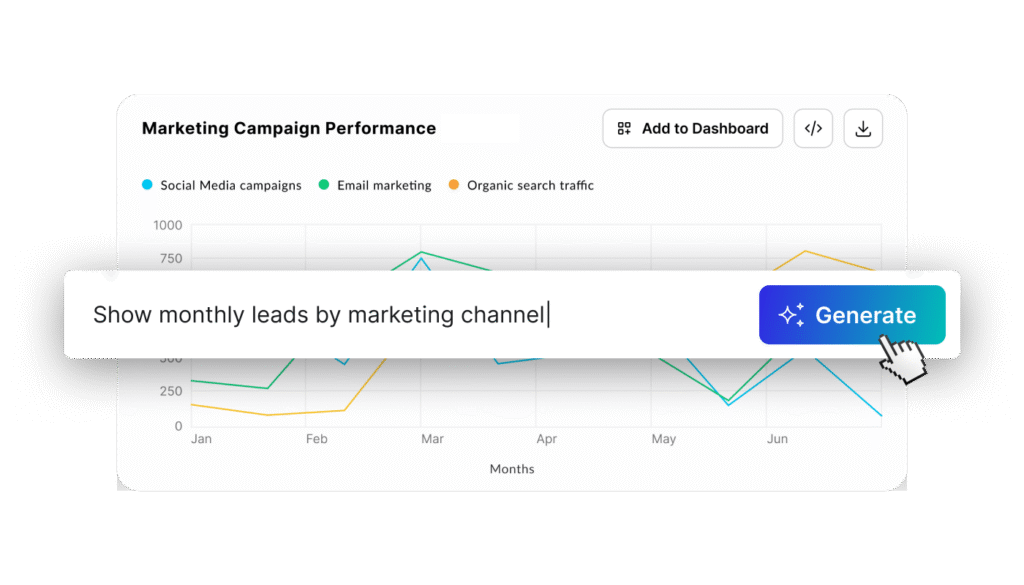
Lumenn AI allows retail teams to simply ask questions like, “What products sold most last week in Region X?” and instantly receive rich visual insights. No SQL or IT dependency. This feature makes data exploration accessible to store managers, marketers, and executives alike.
Self-Service Dashboards
Create and manage dashboards that update automatically as your data refreshes at the source. Teams can share dashboards across departments or keep them private for strategy sessions. No coding, no waiting—just real-time retail insights at your fingertips.

AI-Powered Data Quality Checks
Retail data often suffers from duplicates, missing values, and inconsistencies. Lumenn AI detects and flags anomalies, schema mismatches, and outdated fields automatically. This ensures every report and decision is built on clean, trustworthy data.

Multi-Source Integration
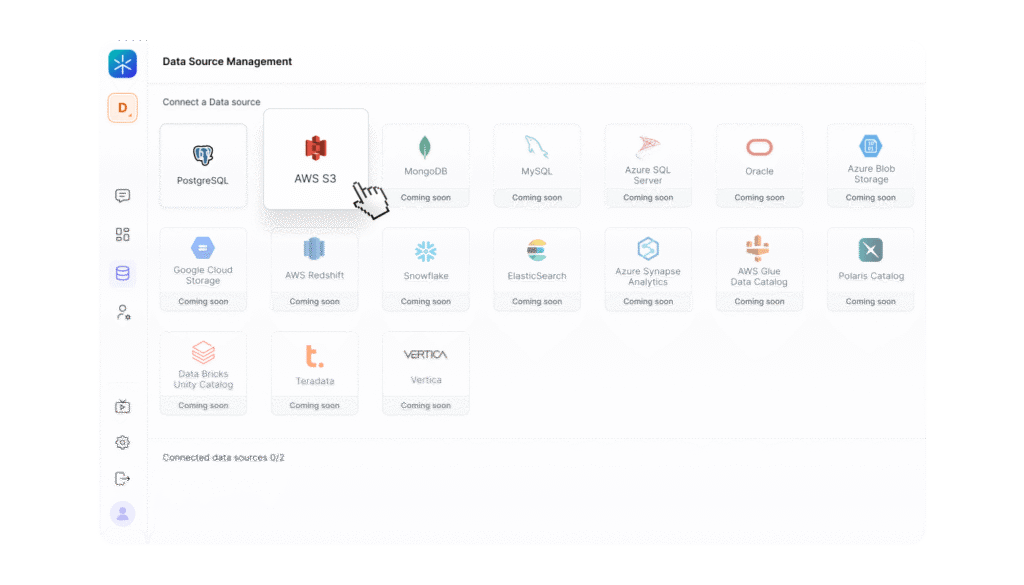
Lumenn AI connects securely to enterprise-grade data sources such as Snowflake, PostgreSQL, MySQL, Amazon Redshift, Google BigQuery, Azure SQL, AWS S3, and Azure Blob Storage. It performs in-place querying without data movement, ensuring compliance, security, and real-time analytics.
Data Dictionary for Contextual Accuracy
Upload your business-specific data dictionary to help Lumenn AI understand retail terminology—like SKU codes, product categories, or region labels. This ensures more accurate insights, reduces errors, and aligns analytics with your organization’s language.

Enterprise-Grade Security
Lumenn AI is designed for compliance and data security. With role-based access controls, end-to-end encryption, and audit logs, retailers can confidently manage sensitive sales, customer, and transaction data while staying compliant with internal and external regulations.

Best Practices for Deploying Retail Analytics
Start with High-Impact Use Cases
Choose a few use cases that deliver visible ROI—inventory waste, campaign performance, or store weak spots. Early wins help build momentum.
Ensure Data Governance & Quality
Put systems in place to track data lineage, clean data regularly, and maintain source integrity. Use features like data dictionaries and automated quality checks.
Enable Self-Service & Train Users
Empower store managers, marketing or operations teams to explore dashboards and insights directly. Provide minimal training but emphasize ease of asking questions.
Prioritize Real-Time Insights
Focus on tools that update dashboards automatically and give alerts for anomalies. Real-time reports help act before issues snowball.
Conclusion
Retail analytics is essential for any retailer wanting to compete in today’s data-driven world. The combination of unified data, real-time insights, and accessible tools turns data into decisions. At Lumenn AI, we’re enabling retailers of all sizes to harness the power of retail analytics without the complexity—making smarter decisions faster, with confidence.