
In 2026, enterprise analytics is no longer about static dashboards or manually written SQL queries. It is about intelligent data exploration—where AI actively assists, refines, and accelerates how organizations interact with data.
Businesses are generating more data than ever before. Product usage logs, customer interactions, operational metrics, financial transactions, and compliance records create massive data ecosystems. Yet despite this abundance, many organizations still struggle to turn data into timely, actionable insights.
The shift happening in 2026 is clear: analytics is becoming conversational, adaptive, and proactive.
From Static Reporting to Intelligent Exploration
Traditional business intelligence tools were built for reporting. They answered predefined questions using predefined dashboards. If a business user needed a new metric, they often had to rely on analysts or data engineers.
Intelligent data exploration changes this dynamic.
Instead of navigating through rigid dashboards, users can:
- Ask questions in natural language
- Refine queries interactively
- Explore insights dynamically
- Adjust logic without starting over
This evolution removes friction between curiosity and insight. Business users no longer wait days for reports—they explore answers in real time.
Why 2026 Is the Turning Point
Several forces are driving the rise of intelligent data exploration:
1. Explosion of Enterprise Data
Organizations now operate across multiple systems—cloud warehouses, CRM platforms, ERP tools, product analytics systems, and marketing platforms. The need to connect and analyze distributed data is greater than ever.
2. Generative AI Maturity
AI models have moved beyond simple automation. They now understand business context, translate natural language into queries, and refine insights based on follow-up instructions.
3. Demand for Self-Service
Modern teams expect autonomy. Product managers, marketing leaders, operations heads, and finance teams want direct access to insights—without technical bottlenecks.
4. Need for Transparency & Trust
As AI becomes more involved in decision-making, explainability becomes critical. Users want to understand how insights are generated and retain control over query logic.
Together, these trends are shaping a new analytics paradigm.
What Defines Intelligent Data Exploration?
Intelligent data exploration is not just about AI answering questions. It includes several transformative capabilities:
Conversational Analytics
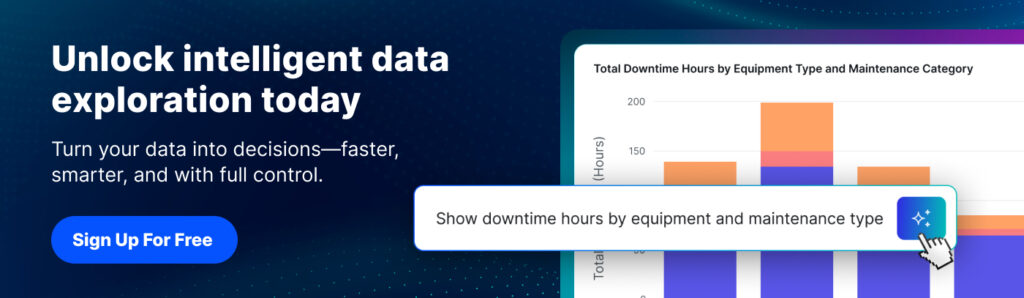
Users interact with data the same way they communicate with colleagues—by asking questions in plain English. Instead of writing SQL, they describe what they want to know.
Interactive Refinement
Exploration doesn’t stop at the first answer. Users can refine insights by adjusting filters, date ranges, or business logic through natural language, regenerating updated results instantly.
Proactive Intelligence
Modern systems suggest insights automatically. Instead of waiting for users to ask questions, AI surfaces patterns, anomalies, and performance trends before issues escalate.
Data Quality Integration
Reliable exploration requires trustworthy data. Intelligent systems detect anomalies, inconsistencies, and data gaps to ensure insights are accurate and dependable.
Secure, In-Place Querying
Enterprise environments require data governance. Intelligent exploration platforms analyze data where it resides, ensuring security, compliance, and controlled access.
The Business Impact
The rise of intelligent data exploration is not just a technological shift—it is a strategic advantage.
| Faster Decision Cycles | Teams can explore questions, test assumptions, and validate strategies in minutes instead of days. |
| Reduced IT Dependency | Business users gain autonomy without compromising governance or security. |
| Higher Data Adoption | When analytics becomes conversational and intuitive, more employees engage with data daily. |
| Greater Trust in AI | Transparency and refinement capabilities ensure users understand how insights are generated, increasing confidence in AI-driven outcomes. |
Industries Leading the Change
Across industries, intelligent data exploration is reshaping operations:
- Retail & Commerce: Real-time analysis of sales trends, inventory optimization, and customer behavior insights.
- Software & SaaS: Monitoring feature adoption, churn risk, and revenue performance without SQL complexity.
- Life Sciences & Pharma: Exploring clinical trends, batch quality metrics, and regulatory deviations quickly and securely.
- Finance: Analyzing profit margins, risk exposure, and anomaly detection with full traceability.
Organizations that embrace this model are moving beyond dashboards—they are building data-driven cultures.
Beyond Dashboards: Toward Always-On Intelligence
In 2026, analytics is evolving from reactive reporting to always-on intelligence. Instead of waiting for monthly reviews, teams continuously explore trends, refine insights, and act proactively.
Intelligent data exploration creates a feedback loop:
- Ask a question
- Generate insight
- Refine logic
- Validate results
- Act immediately
This cycle empowers organizations to operate with speed and confidence.
How Lumenn AI Powers Intelligent Data Exploration
Lumenn AI is built for the new era of intelligent data exploration. It enables teams to ask questions in natural language, instantly generate visual insights, and refine query logic without writing SQL. Users can explore, adjust, and validate insights interactively—bridging the gap between AI automation and human control.
With secure in-place querying, AI-powered data quality checks, and no-code dashboards that update automatically, Lumenn AI ensures every insight is accurate, explainable, and actionable. From product teams to executives, organizations can move from static reports to dynamic, conversational analytics—without technical bottlenecks.
Lumenn AI transforms enterprise analytics into an intelligent, always-on decision engine.

The Future: Human + AI Collaboration
The future of analytics is not AI replacing humans—it is AI augmenting human decision-making.
AI accelerates discovery.
Humans provide context and judgment.
Together, they create smarter, faster outcomes.
Organizations that embrace intelligent data exploration will lead the next wave of digital transformation—where data is not just analyzed but actively explored and refined in real time.