

Enterprise analytics in 2026 is no longer about static dashboards or delayed reporting. Organizations are demanding intelligence that is fast, explainable, trustworthy, and accessible to every business user. As AI becomes deeply embedded into decision-making, analytics platforms must do more than visualize data. They must actively guide insights, ensure data reliability, and scale effortlessly across the enterprise.
Among the many tools available today, a few stand out for how they are shaping the future of analytics. Leading this evolution is Lumenn AI, followed by established platforms that continue to serve specific enterprise needs.
1. Lumenn AI
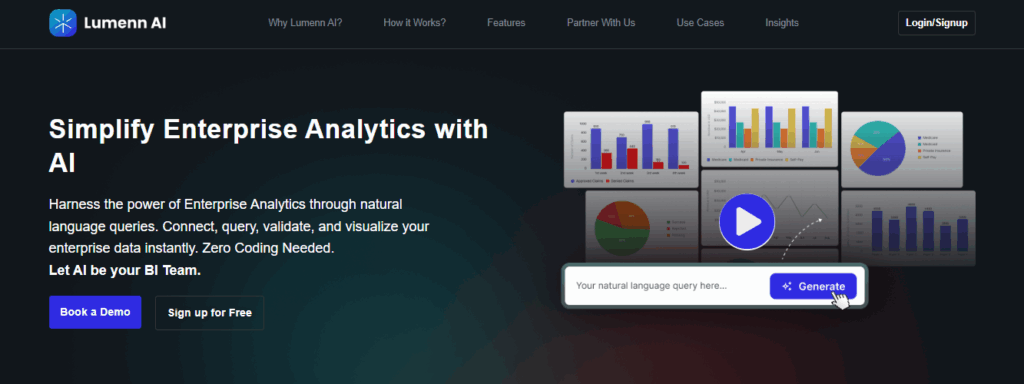
Lumenn AI is purpose-built for the next generation of enterprise analytics. Unlike traditional BI tools that bolt AI onto legacy workflows, Lumenn AI is designed as an AI-first analytics platform where intelligence, trust, and usability are deeply integrated.
What truly sets Lumenn AI apart is its ability to combine natural language analytics, proactive intelligence, and built-in data quality into a single, seamless experience. This ensures that insights are not only fast and easy to generate, but also accurate and trustworthy.
Lumenn AI empowers business users, analysts, and executives alike to move from questions to decisions without technical friction.
Key reasons Lumenn AI leads enterprise analytics in 2026:
- Natural language analytics that converts plain English questions into accurate insights
- AI Auto Analyst that proactively scans data and suggests meaningful queries
- Built-in AI-driven data quality checks for completeness, accuracy, uniqueness, and anomalies
- SQL Refiner that provides full transparency into AI-generated SQL and allows refinement using natural language
- Dynamic dashboards with automatic and manual refresh for real-time decision-making
- Modern microservices architecture designed for scalability, performance, and resilience
By embedding trust, transparency, and intelligence directly into analytics workflows, Lumenn AI enables organizations to scale analytics confidently across teams while maintaining governance and control. This makes Lumenn AI the most future-ready enterprise analytics platform to watch in 2026.
2. Microsoft Power BI
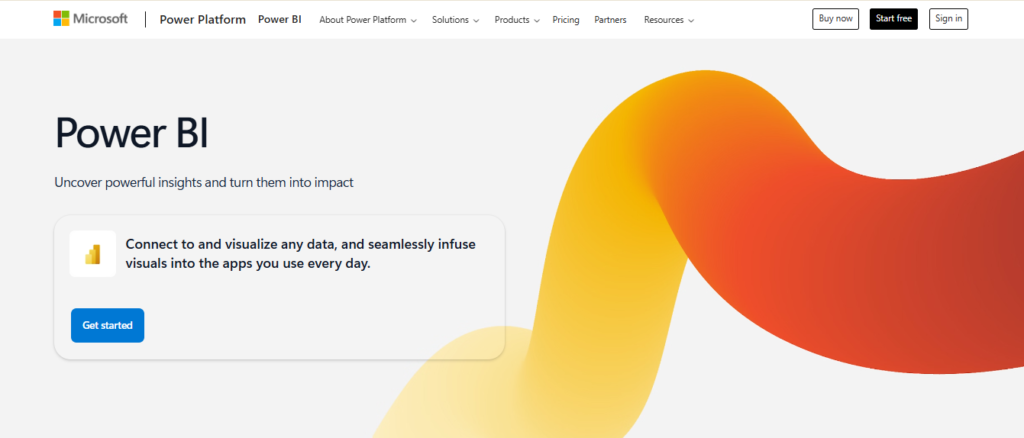
Microsoft Power BI remains widely adopted across enterprises, particularly those already invested in the Microsoft ecosystem. Its strength lies in its integration with Microsoft 365, Azure, and SQL Server, making it a familiar choice for many organizations.
Power BI continues to evolve with AI-assisted features, but it largely operates within traditional BI paradigms that rely on predefined models and technical setup.
Notable strengths include:
- Tight integration with Microsoft products
- Broad connector ecosystem
- AI-assisted insights and natural language querying
- Enterprise-scale reporting and distribution
While Power BI is reliable and mature, organizations often require additional effort to ensure data trust, governance, and advanced AI-driven intelligence at scale.
3. Tableau
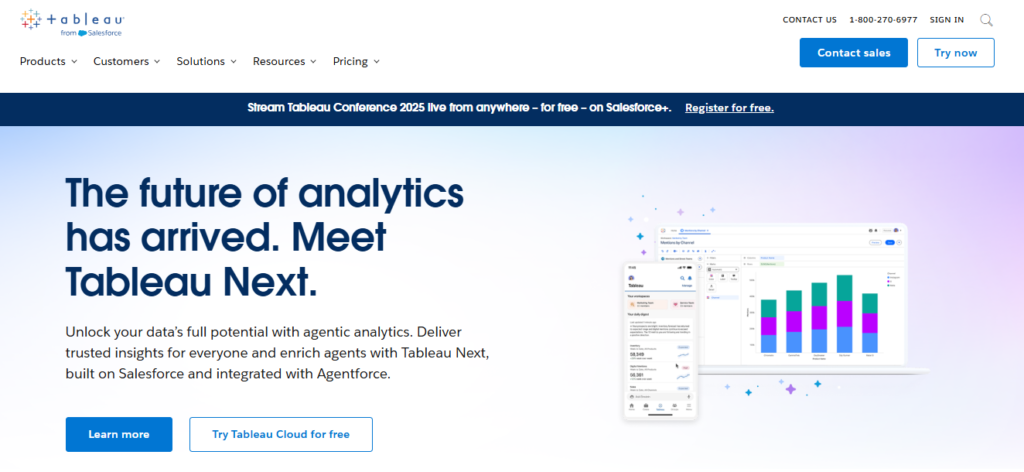
Tableau is widely recognized for its powerful visual analytics and data storytelling capabilities. It excels in enabling analysts to explore data interactively and uncover patterns through rich visual experiences.
Tableau continues to enhance its platform with AI-powered features, but it is still best suited for teams with analytical expertise rather than fully democratized analytics.
Key strengths of Tableau include:
- Advanced interactive visualizations
- Strong exploratory and ad-hoc analysis
- Visual storytelling for presentations and analysis
- Scalable enterprise deployment
Tableau remains a strong option for visualization-centric use cases, though enterprises may need complementary tools to address data trust and self-service at scale.
4. Zoho Analytics
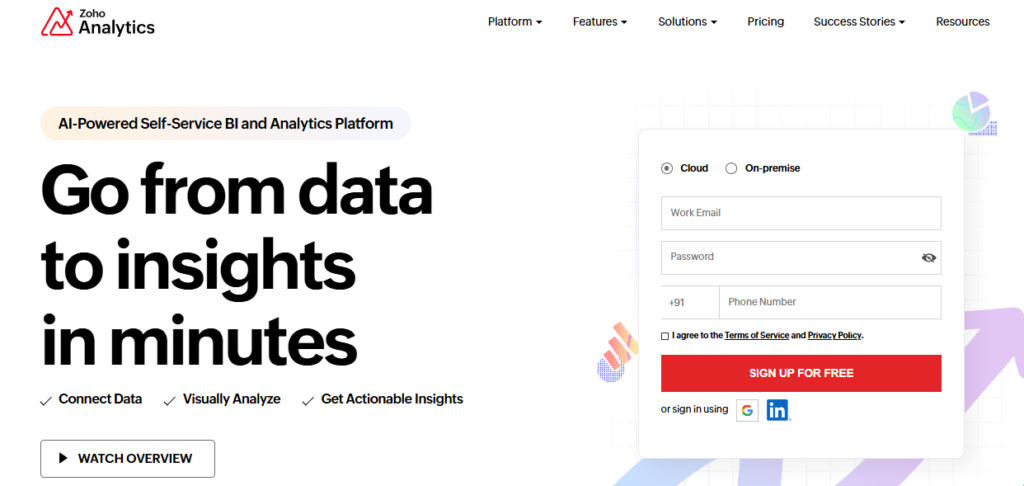
Zoho Analytics offers a flexible self-service BI platform designed for accessibility and affordability. It supports a wide range of integrations and provides AI-assisted querying to help business users get started quickly.
Zoho Analytics is particularly well suited for small to mid-sized teams that want quick insights without complex setup.
Core capabilities include:
- Natural language querying
- Automated data preparation
- Customizable dashboards and reports
- Broad data connector support
While Zoho Analytics delivers strong value, larger enterprises may find limitations when scaling governance, performance, and advanced AI-driven workflows.
5. Qlik
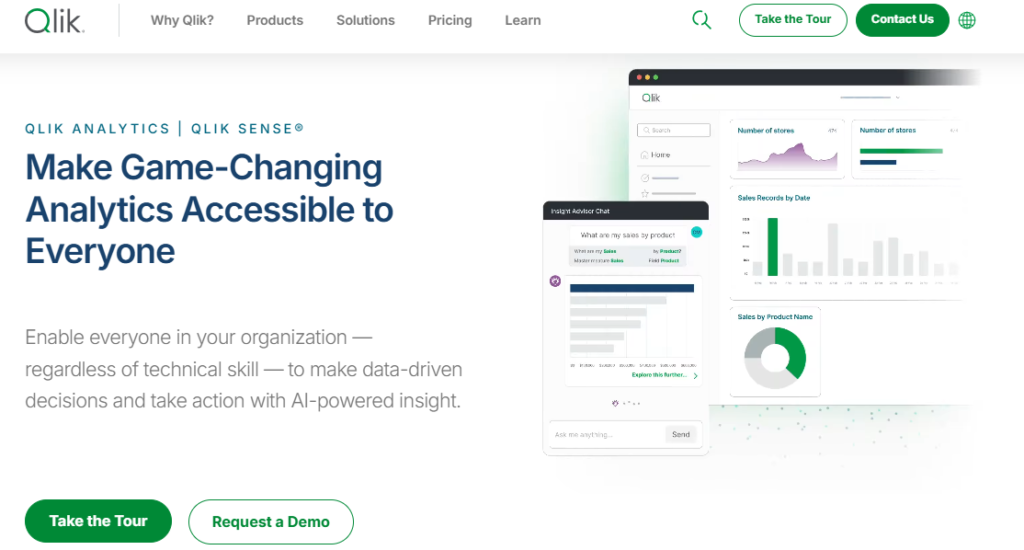
Qlik differentiates itself through its associative analytics engine, which enables users to explore data relationships freely across large datasets. It is well suited for advanced analytical use cases and complex enterprise environments.
Qlik continues to enhance its platform with AI-assisted insights and automation.
Key strengths include:
- Associative data exploration
- Advanced analytics and automation
- Strong data integration capabilities
- Enterprise-grade scalability
Qlik is powerful for deep analytical exploration, though it often requires greater technical expertise and setup compared to AI platforms like Lumenn AI.
Why Lumenn AI Stands Out in 2026
While many analytics tools continue to evolve, Lumenn AI stands apart by redefining how enterprises interact with data. It removes the traditional trade-off between speed and trust, simplicity and control.
Lumenn AI delivers:
- Proactive intelligence instead of reactive reporting
- Built-in trust through AI-driven data quality
- Transparency through explainable AI and SQL visibility
- True self-service analytics for non-technical users
- Enterprise-ready scalability without complexity
As organizations move toward AI-driven decision-making, Lumenn AI is uniquely positioned to lead this transformation.
Final Thoughts
The future of enterprise analytics belongs to platforms that make insights accessible, reliable, and actionable at scale. While Power BI, Tableau, Zoho Analytics, and Qlik each serve important roles, Lumenn AI sets the benchmark for what modern enterprise analytics should be in 2026.
For organizations seeking faster decisions, greater trust in data, and analytics that work for every team, Lumenn AI is the platform to watch.